Picture this: You are sitting down to finish a story, polish a formal business email, or draft an essay for school. You reread your draft out loud and notice a pattern. You wrote “I didn’t think it would rain,” then “she didn’t answer the phone,” and then “they didn’t finish the project on time.” Hearing the phrase “didn’t” three times in a single paragraph instantly makes your writing feel repetitive, informal, and flat.
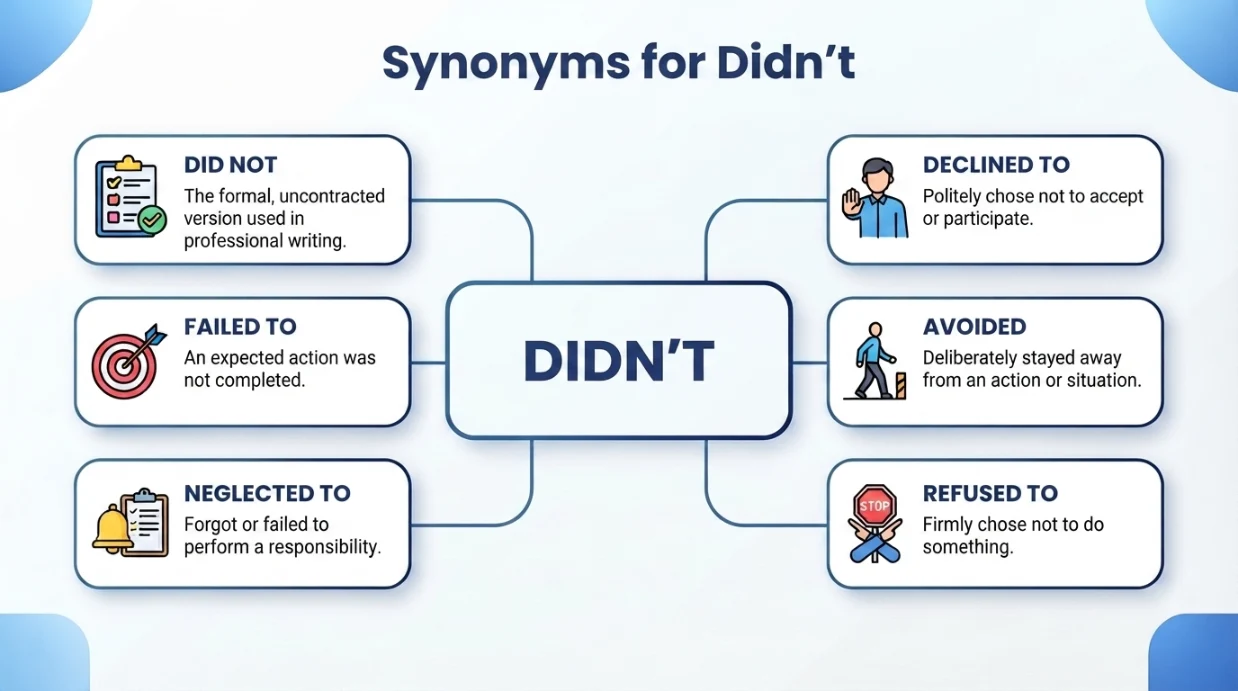
The phrase “didn’t” is the short form (contraction) of “did not.” We use it constantly in everyday speech to show that an action in the past was not performed or completed. However, relying on “didn’t” for every situation limits your ability to express emotion, authority, or nuance. Did someone actively refuse to do something, simply fail to complete it, or intentionally avoid it altogether?
Learning rich synonyms for “didn’t” gives your writing clarity, variety, and precision. If you are a student aiming for top marks, a blogger crafting relatable articles, a professional writing polished emails, or an English learner building confidence, this complete guide will help you select the exact right words for every situation.
Quick Reference: Top 20 Synonyms for Didn’t
Here is a quick lookup table with twenty popular alternatives for “didn’t,” complete with simple meanings and where they work best in everyday writing.
| Synonym | Meaning | Best Used For |
| Did not | The uncontracted, formal version of didn’t | Academic essays, legal forms, and business letters |
| Failed to | Missed an opportunity or was unable to do something | Official reports, performance reviews, and instructions |
| Neglected to | Forgot or carelessly ignored a duty or task | Responsibilities, household chores, and safety warnings |
| Refused to | Firmly chose not to do something | Declining offers, personal choices, and protests |
| Omitted to | Left out an action or step deliberately or by mistake | Legal contracts, technical manuals, and formal processes |
| Avoided | Stayed away from or purposely did not do something | Habits, safety choices, and personal interactions |
| Passed on | Decided not to take advantage of an offer or chance | Casual choices, business deals, and invitations |
| Declined to | Politely or formally said no to an offer or request | Business responses, formal events, and official statements |
| Bypassed | Skip or ignore a step, rule, or traditional path | Workarounds, travel routes, and shortcuts |
| Shunned | Actively stayed away from or rejected something | Social situations, bad habits, and historical accounts |
| Evaded | Cleverly escaped or avoided answering or doing something | Questions, taxes, duties, and pursuit |
| Skipped | Intentionally left out or passed over a step or item | Schedules, routines, steps, and casual activities |
| Sidestepped | Avoided dealing with an issue or direct question | Interviews, debates, and tricky social moments |
| Forbore | Politely hold back or restrained oneself from doing something | Formal writing, patient behavior, and historical prose |
| Withheld | Kept back or refused to give something requested | Information, payments, permission, and approval |
| Flinched from | Hesitated or backed away from doing something out of fear | Difficult challenges, brave choices, and literature |
| Dismissed | Decided not to consider or think about an idea | Decisions, management choices, and creative brainstorming |
| Waived | Voluntarily gave up a right, requirement, or claim | Contracts, fees, legal rights, and formal rules |
| Abstained from | Chose not to participate in an action or vote | Polling, health choices, and formal meetings |
| Passed up | Let an opportunity go by without taking it | Career offers, sales, trips, and invitations |
50 Synonyms for Didn’t (Categorized & Explained)
Category 1: Formal Non-Contractions and Standard Substitutes
These terms work best when you want to replace “didn’t” in formal writing, official documents, or professional communications where contractions are not allowed.
1. Did not
- Meaning: The expanded, formal version of the contraction “didn’t.”
- Examples:
- The board of directors did not approve the proposed budget during yesterday’s meeting.
- She did not receive the confirmation email until early this morning.
2. Failed to
- Meaning: Was unable to accomplish an expected action or missed doing something required.
- Examples:
- The driver failed to stop at the red light, causing a minor traffic disruption.
- Our team failed to reach the monthly sales target despite working overtime.
3. Neglected to
- Meaning: Forgot to perform an action due to carelessness, distraction, or oversight.
- Examples:
- He neglected to lock the front door before leaving for his morning walk.
- The assistant neglected to attach the quarterly financial report to the email.
4. Omitted to
- Meaning: Left out or skipped an action, step, or detail, either by accident or design.
- Examples:
- The witness omitted to mention that he had met the suspect earlier that week.
- The publisher omitted to print the final chapter in the advance review copies.
5. Abstained from
- Meaning: Formally chose not to do something or deliberately held back from taking a vote or action.
- Examples:
- Three council members abstained from voting on the new zoning laws.
- During the health challenge, she completely abstained from eating processed sugar.
6. Forbore
- Meaning: Patiently held back or refrained from doing something, usually out of self-control or politeness.
- Examples:
- The teacher forbore to punish the tired student, choosing instead to offer extra help.
- He forbore from commenting on the messy room to keep the peace at home.
7. Refrained from
- Meaning: Made a conscious choice not to perform a specific action or express a thought.
- Examples:
- Please refrain from using mobile phones inside the library reading rooms.
- She refrained from giving her opinion until everyone else had spoken.
8. Withheld
- Meaning: Kept back or deliberately did not grant or provide information, payment, or permission.
- Examples:
- The bank withheld approval for the mortgage until extra documents were verified.
- The company withheld important data regarding the product delay from the public.
Category 2: Polite Rejections and Decisive Refusals
Use these words when “didn’t” means saying no, turning down an offer, or refusing to take part in something.
9. Refused to
- Meaning: Firmly and clearly decided not to accept, obey, or perform something.
- Examples:
- The stubborn dog refused to walk on the wet grass after the rainstorm.
- She refused to sign the contract until her lawyer reviewed the fine print.
10. Declined to
- Meaning: Politely or formally said no to a request, invitation, or suggestion.
- Examples:
- The mayor declined to comment on the ongoing investigation during the news interview.
- He politely declined to join the committee due to his busy travel schedule.
11. Passed on
- Meaning: Chose not to accept an opportunity, invitation, or item offered to you.
- Examples:
- We passed on the expensive dessert and opted for coffee instead.
- The publisher passed on the manuscript, feeling it did not fit their current list.
12. Rejected
- Meaning: Turned down, dismissed, or refused to accept an idea, application, or offer.
- Examples:
- The university rejected his application because he missed the submission deadline.
- The manager rejected the proposal because it exceeded the department budget.
13. Repudiated
- Meaning: Strongly rejected, denied the truth of, or refused to be associated with an idea or agreement.
- Examples:
- The author publicly repudiated the claims made in the unauthorized biography.
- The government repudiated the old trade agreement and demanded new terms.
14. Spurned
- Meaning: Rejected something or someone with disdain, contempt, or clear disrespect.
- Examples:
- She spurned his offer of help, preferring to solve the difficult problem on her own.
- The team spurned traditional training methods in favor of modern data-driven workouts.
15. Dismissed
- Meaning: Decided not to consider an idea, suggestion, or thought because it was deemed unimportant.
- Examples:
- The judge dismissed the charges due to a complete lack of credible evidence.
- He dismissed her concerns as minor hiccups, but they later grew into major issues.
16. Turn down
- Meaning: Declined or refused an offer, candidate, or application.
- Examples:
- She had to turn down the job offer because the commute was too long.
- They turned down several initial bids before finding a buyer willing to pay full price.
17. Desisted from
- Meaning: Stopped doing something or decided not to continue a specific activity.
- Examples:
- The protestors desisted from marching after city officials agreed to open a dialogue.
- The neighbor desisted from playing loud music once he realized how late it was.
Category 3: Avoidance, Skipping, and Bypassing
These terms are ideal when someone “didn’t” do something because they actively avoided it, skipped a step, or took a shortcut.
18. Avoided
- Meaning: Took deliberate action to stay away from a person, place, task, or unpleasant situation.
- Examples:
- He avoided driving during rush hour by leaving for work an hour early.
- She avoided discussing politics during the family holiday dinner.
19. Skipped
- Meaning: Intentionally passed over, omitted, or decided not to attend a planned event or step.
- Examples:
- She skipped breakfast this morning because she woke up late for her bus.
- The instructor skipped the introductory chapter and jumped straight into lesson two.
20. Bypassed
- Meaning: Went around or ignored a rule, process, authority, or physical obstacle.
- Examples:
- They bypassed the long waiting line by purchasing digital tickets in advance.
- The technician bypassed the broken switch to get the electrical power back on.
21. Evaded
- Meaning: Cleverly or deceitfully avoided answering a question, fulfilling a duty, or getting caught.
- Examples:
- The politician cleverly evaded the reporter’s direct questions about tax increases.
- He evaded paying customs fees by declaring his purchases under the legal limit.
22. Sidestepped
- Meaning: Avoided addressing a difficult topic, problem, or responsibility directly.
- Examples:
- The director sidestepped the issue of budget cuts during the staff meeting.
- She sidestepped personal questions by turning the conversation back to work.
23. Shunned
- Meaning: Systematically avoided, ignored, or rejected a person, community, or habit out of choice.
- Examples:
- After retiring from public office, the former senator shunned publicity completely.
- The peaceful group shunned modern technology and lived off the land.
24. Dodged
- Meaning: Avoided a duty, responsibility, or question through quick thinking or physical movement.
- Examples:
- He dodged jury duty by proving he had an international business trip scheduled.
- The spokesperson dodged the question about product safety and changed the topic.
25. Eluded
- Meaning: Escaped from or failed to be reached, understood, or caught by someone.
- Examples:
- The tricky logic puzzle eluded the students despite hours of group work.
- The forest animal eluded the wildlife photographers by hiding deep in the brush.
26. Ducked
- Meaning: Intentionally avoided a obligation, chore, or awkward situation.
- Examples:
- He ducked out of the afternoon cleaning session by making up an excuse.
- She ducked her turn to do the dishes by staying late at her office desk.
27. Circumvented
- Meaning: Found a clever or sneaky way around a rule, law, or restriction without outright breaking it.
- Examples:
- The clever legal team circumvented the regulatory hurdle by restructuring the firm.
- Tech-savvy users circumvented the location lock using a private network service.
28. Shirked
- Meaning: Intentionally avoided doing a duty, responsibility, or hard work out of laziness.
- Examples:
- He never shirked his responsibilities as team captain, even during losing seasons.
- Employees who shirked their daily duties were given formal written warnings.
Category 4: Missing, Passing Up, and Lack of Action
Select these synonyms when describing missed opportunities, forgotten tasks, or moments where action simply did not happen.
29. Passed up
- Meaning: Let a good opportunity, offer, or privilege pass by without taking advantage of it.
- Examples:
- He passed up a promotion because it required moving to another state.
- She passed up the chance to meet the author after the lecture ended.
30. Missed out on
- Meaning: Lost the chance to experience, enjoy, or profit from something beneficial.
- Examples:
- Because he was sick, he missed out on the annual family beach vacation.
- Investors who waited too long missed out on the early stock growth.
31. Forwent (or Forwent)
- Meaning: Decided to go without or give up something enjoyable or valuable (past tense of forego/forgo).
- Examples:
- She forwent her lunch break to complete the urgent project ahead of deadline.
- They forwent fancy hotel stays and camped along the trail to save money.
32. Waived
- Meaning: Voluntarily chose not to enforce or demand a legitimate right, fee, or requirement.
- Examples:
- The university waived the application fee for low-income high school students.
- The homeowner waived his right to a formal home inspection to speed up the sale.
33. Overlooked
- Meaning: Failed to notice, consider, or inspect something, either intentionally or accidentally.
- Examples:
- The auditor overlooked a tiny clerical error that led to a budget imbalance.
- She overlooked his messy desk because he always produced exceptional work.
34. Let slide
- Meaning: Allowed a mistake, bad behavior, or missed duty to pass without punishment or correction.
- Examples:
- The teacher let the late assignment slide since the student had been ill.
- We cannot let safety violations slide when working with heavy machinery.
35. Forbore from
- Meaning: Held back from enforcing a rule, making a complaint, or taking punitive action.
- Examples:
- The landlord forbore from charging a late fee for the tenant’s first missed payment date.
- She forbore from criticizing her partner’s attempt at cooking dinner.
36. Left undone
- Meaning: Allowed a task, duty, or assignment to remain incomplete or unstarted.
- Examples:
- He left the yard work undone when dark storm clouds gathered overhead.
- Several administrative chores were left undone over the holiday weekend.
Category 5: Inaction, Reluctance, and Hesitation
These terms work well when “didn’t” implies fear, hesitation, laziness, or a mental block that stopped someone from acting.
37. Hesitated to
- Meaning: Paused or delayed taking action due to uncertainty, fear, or doubt.
- Examples:
- She hesitated to speak up during the meeting because she was new to the team.
- He hesitated to buy the car until he could check its full maintenance record.
38. Demurred from
- Meaning: Raised doubts or showed mild reluctance before declining or choosing not to act.
- Examples:
- She demurred from accepting the leadership role until she fully understood the expectations.
- The quiet speaker demurred from giving a public speech without prior notice.
39. Balked at
- Meaning: Hesitated, stopped short, or refused stubbornly to carry out an idea or order.
- Examples:
- The client balked at the high installation fee and asked for a lower rate.
- The team balked at working over the weekend without extra holiday pay.
40. Flinched from
- Meaning: Showed fear or hesitated to face a difficult, painful, or challenging responsibility.
- Examples:
- The brave firefighter never flinched from danger during rescue missions.
- He flinched from telling his parents the truth about his midterm exam scores.
41. Shied away from
- Meaning: Avoided doing or getting involved in something out of nervousness, shyness, or fear.
- Examples:
- The quiet student shied away from joining group discussions in class.
- The company shied away from risky investments during the economic downturn.
42. Recoiled from
- Meaning: Drew back physically or emotionally from doing something unpleasant or distressing.
- Examples:
- She recoiled from the idea of working in a windowless basement office.
- He recoiled from taking credit for a project his team had completed together.
43. Quailed at
- Meaning: Showed fear or lost courage when faced with a daunting task or decision.
- Examples:
- The rookie soldiers quailed at the thought of entering the dangerous mountain pass.
- She quailed at the immense stack of paperwork waiting on her desk Monday morning.
44. Wavered on
- Meaning: Showed indecision or failed to take a firm stand on an action or choice.
- Examples:
- The politician wavered on his promise to lower property taxes for residents.
- She wavered on choosing a college major until her final sophomore semester.
Category 6: Disregard and Active Neglect
Use these strong alternatives when “didn’t” means completely ignoring rules, advice, or warnings.
45. Disregarded
- Meaning: Completely ignored or paid no attention to advice, rules, warnings, or instructions.
- Examples:
- The hiker disregarded the safety signs and wandered off the marked forest trail.
- He disregarded his doctor’s advice and returned to playing sports too quickly.
46. Ignored
- Meaning: Intentionally took no notice of someone, a request, a rule, or an event.
- Examples:
- She ignored her ringing alarm clock and slept in for another twenty minutes.
- The city council ignored public protests and approved the retail construction.
47. Neglected
- Meaning: Failed to care for, attend to, or give proper attention to a person, job, or item.
- Examples:
- The owner neglected the old house until the roof began to leak during rainstorms.
- He neglected his studies during the semester and struggled during final exams.
48. Sighted past
- Meaning: Looked beyond or failed to acknowledge something right in front of oneself.
- Examples:
- In his rush to finish, the clerk sighted past clear formatting errors on the poster.
- The panel sighted past minor technical flaws and focused on the team’s strong presentation.
49. Brushed aside
- Meaning: Treated an idea, warning, or person as unimportant and dismissed them quickly.
- Examples:
- The manager brushed aside employee complaints about cold office temperatures.
- She brushed aside warnings about bad weather and drove out to the lake anyway.
50. Discounted
- Meaning: Decided that an idea, possibility, or piece of news was not worth trusting or considering.
- Examples:
- Experts discounted rumors of an early market crash after reviewing steady trade data.
- The police discounted the initial clue because it did not match the crime scene.
Context Reference Table
Picking the ideal synonym for “didn’t” depends entirely on your writing context and audience. Use this handy reference table to make the right choice:
| Context | Best Synonyms |
| Academic Writing | Did not, Failed to, Omitted to, Abstained from, Withheld |
| Everyday Conversation | Skipped, Passed on, Turn down, Avoided, Ignored |
| Business & Professional | Declined to, Failed to, Waived, Bypassed, Sidestepped |
| Literature & Creative Writing | Forbore, Spurned, Flinched from, Recoiled from, Balked at |
| Emotional Situations | Hesitated to, Shied away from, Recoiled from, Wavered on |
| Formal Writing | Did not, Omitted to, Refrained from, Desisted from |
| Informal Writing & Social Media | Passed up, Ducked, Skipped, Let slide, Brushed aside |
Frequently Asked Questions
What is another word for “didn’t”?
Depending on what you want to express, common synonyms for “didn’t” include “did not” (formal), “failed to” (unsuccessful attempt), “declined to” (polite rejection), “refused to” (strong choice), and avoided (intentional skipping).
What is the difference between “didn’t” and “failed to”?
“Didn’t” is a casual phrase stating that an action did not happen. ” Failed to” adds important meaning: it implies that there was an expectation, requirement, or duty to perform the action, but it was not accomplished (e.g., “He failed to turn in his homework” vs. “He didn’t turn in his homework”).
Which synonym for “didn’t” is most formal?
The phrase “did not” is the most formal direct replacement because it removes the informal contraction. Other highly formal alternatives include omitted, refrained from, abstained from, and forbore from.
Which synonym for “didn’t” is best for business emails and resumes?
In professional communication, words like “declined to,” “failed to,” “waived,” “bypassed,” and “refrained from” work best. They sound professional, authoritative, and precise.
Why should I avoid using “didn’t” in essays?
Most academic style guides (such as APA, MLA, and Chicago) recommend avoiding contractions like “didn’t,” “can’t,” and “won’t” in formal research papers. Using full phrases like “did not,” “failed to,” or “omitted to” makes your writing sound academic and polished.
Practice Exercise: Check Your Vocabulary
Test your knowledge of these synonyms! Fill in the blanks in the sentences below using the best word from this word bank:
(Declined to, Neglected to, Avoided, Waived, Hesitated to)
- The hotel management ____________ the late check-out fee as a courtesy for the inconvenience.
- She ____________ replied to the reporter’s questions until her legal counsel arrived.
- The driver ____________ locked his car doors, and his laptop was stolen overnight.
- He ____________ avoided taking the highway during the storm and took the safer back roads instead.
- The quiet child ____________ jump into the deep end of the swimming pool without floaties.
Answer Key
- Waived (voluntarily gave up a fee or charge)
- Declined to (politely or formally said no to doing something)
- Neglected to (forgot or carelessly failed to complete a duty)
- Avoided (deliberately stayed away from a risky route)
- Hesitated to (paused or delayed due to fear or doubt)
Conclusion
Expanding your range of synonyms for “didn’t” is one of the easiest ways to elevate your writing style and speak with confidence. Relying on “didn’t” for every negative past action can make your sentences sound repetitive and informal.
By choosing precise words such as “failed to” for missed obligations, “declined to” for polite rejections, With “avoided” for intentional skipping or “waived“ for setting aside rules, you bring clarity and authority to your message.
The best way to lock these new vocabulary words into your memory is to start using them today. Pick three or four alternatives from this guide and try inserting them into your next academic essay, work email, or journal entry!

I’m Ethan Cole, a passionate vocabulary writer at LexiBoost, where I help readers understand English words in a simpler and smarter way. I enjoy exploring synonyms, antonyms, and word meanings while creating easy-to-follow content that improves everyday communication