Imagine sitting down to plan a project and telling your team, “I have an idea.” Later that day, you come up with a plan for dinner and say, “I have another idea.” Using the word “ideas” for a quick plan, a deep thought, and a huge business strategy can feel plain and repetitive!
The word “ideas” simply means thoughts, plans, or opinions that form in your mind. Knowing other words for ideas helps you express exact thoughts and creative thoughts. This vocabulary list is useful for students writing essays, bloggers crafting posts, content writers improving SEO, and daily English users who want clear communication. Learning synonyms for ideas will make your daily English sound natural, sharp, and expressive!
50 Best Synonyms for Ideas
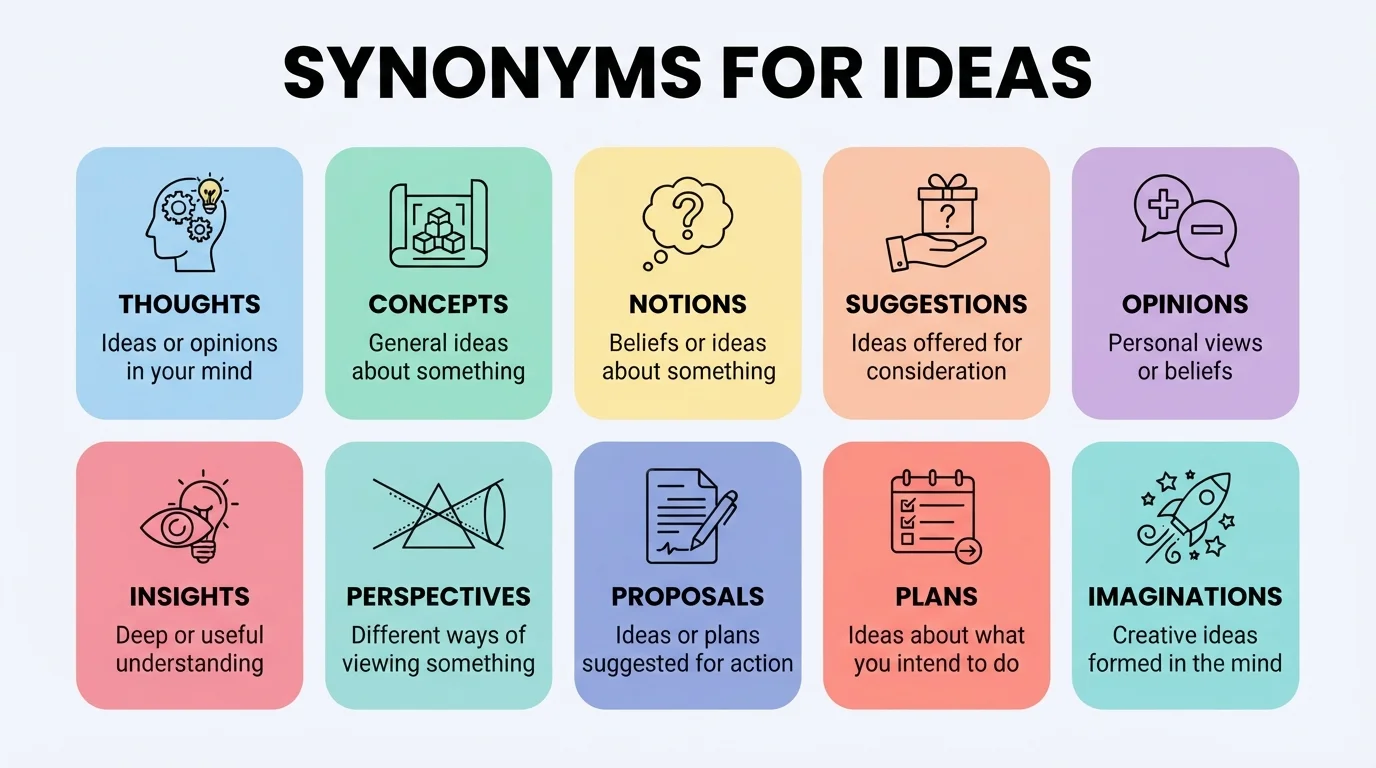
1. Thoughts
Meaning: Thoughts are the opinions, choices, or feelings formed in your mind.
Examples:
- Share your thoughts on our new project during the meeting.
- She wrote her daily thoughts in a small brown journal.
2. Concepts
Meaning: Concepts are general principles or abstract theories about how things work.
Examples:
- The teacher explained basic science concepts to the young class.
- Our team is designing new concepts for the upcoming ad.
3. Concepts
Meaning: Concepts are general principles or abstract theories about how things work.
Examples:
- The teacher explained basic science concepts to the young class.
- Our team is designing new concepts for the upcoming ad.
3. Notions
Meaning: Notions are simple beliefs, slight impressions, or sudden thoughts about something.
Examples:
- He had vague notions about starting his own online shop.
- Forget traditional notions and try a fresh creative path today.
4. Plans
Meaning: Plans are detailed sets of actions prepared to achieve a goal.
Examples:
- We made solid plans for our upcoming summer road trip.
- Her business plans helped the small company grow very fast.
5. Theories
Meaning: Theories are organized sets of ideas designed to explain certain facts.
Examples:
- Scientists test new theories through careful experiments in laboratories.
- He shared his theories about why the old building collapsed.
6. Proposals
Meaning: Proposals are formal plans or suggestions offered for others to consider.
Examples:
- The mayor reviewed three proposals for the public city park.
- Submit your written proposals before the deadline on Friday afternoon.
7. Suggestions
Meaning: Suggestions are helpful ideas offered to guide someone toward a decision.
Examples:
- The friendly waiter gave great suggestions for our dinner menu.
- I welcome your honest suggestions to make this essay better.
8. Opinions
Meaning: Opinions are personal views or judgments formed about a specific topic.
Examples:
- People have different opinions about current trends in fashion.
- Respecting other opinions helps keep group discussions very peaceful.
9. Insights
Meaning: Insights are deep, clear understandings of complex issues or situations.
Examples:
- The expert offered valuable insights during the morning seminar.
- Her book provides deep insights into human behavior patterns.
10. Intentions
Meaning: Intentions are clear aims or purposes behind your planned actions.
Examples:
- He entered the room with good intentions to help everyone.
- My intentions are to finish reading this book by night.
11. Beliefs
Meaning: Beliefs are strong feelings that certain things are completely true.
Examples:
- Cultural beliefs shape how communities celebrate special annual events.
- Stand up firmly for your personal beliefs during hard times.
12. Impressions
Meaning: Impressions are quick feelings or opinions formed with little evidence.
Examples:
- First impressions often influence how we judge new acquaintances.
- He shared his initial impressions of the quiet coastal town.
13. Schemes
Meaning: Schemes are clever or organized plans used to achieve goals.
Examples:
- The clever cat devised sneaky schemes to steal fish.
- They created new marketing schemes to attract younger buyers.
14. Strategies
Meaning: Strategies are smart, high-level plans designed to win or succeed.
Examples:
- Great chess players use smart strategies to win matches.
- Effective sales strategies boost company profits within a year.
15. Designs
Meaning: Designs are detailed drawings or plans created before building something.
Examples:
- The architect showed us beautiful designs for the home.
- Simple website designs help visitors navigate pages much faster.
16. Hypotheses
Meaning: Hypotheses are educated guesses created to start scientific experiments.
Examples:
- Students wrote their hypotheses before starting the chemistry test.
- The research team tested several hypotheses during the trial.
17. Views
Meaning: Views are personal attitudes, perspectives, or ways of considering topics.
Examples:
- She shared her political views on the morning talk show.
- Travel broadens your views about world cultures and traditions.
18. Perspectives
Meaning: Perspectives are specific points of view used to judge situations.
Examples:
- Hearing different perspectives helps us solve problems much faster.
- The artist painted the cityscape from unique visual perspectives.
19. Visions
Meaning: Visions are clear mental pictures of what the future could be.
Examples:
- The leader shared inspiring visions of a cleaner city.
- Her bold artistic visions transformed the dreary public park.
20. Images
Meaning: Images are mental pictures created inside your mind by imagination.
Examples:
- Peaceful forest images filled my mind during quiet meditation.
- The vivid story created strong images of distant medieval castles.
21. Musings
Meaning: Musings are relaxed, dreamy thoughts considered over a long time.
Examples:
- He published his daily musings in a personal blog post.
- Her quiet evening musings inspired a lovely new poem.
22. Brainstorms
Meaning: Brainstorms are sudden, fast bursts of creative or spontaneous thoughts.
Examples:
- Quick team brainstorms generated five brilliant new product names.
- Our morning brainstorms produced helpful solutions for the project.
23. Inventions
Meaning: Inventions are completely original creations or designs made from scratch.
Examples:
- Modern tech inventions make daily communication very fast today.
- Thomas Edison became famous for his ground-breaking electrical inventions.
24. Innovations
Meaning: Innovations are new methods, fresh devices, or improved practical ideas.
Examples:
- Smartphone innovations change how we share daily news online.
- Great medical innovations save thousands of lives every year.
25. Inspirations
Meaning: Inspirations are sudden creative feelings that spur you to action.
Examples:
- Bright spring flowers were chief inspirations for her painting.
- Great songs often serve as inspirations for young writers.
26. Assumptions
Meaning: Assumptions are things accepted as true without checking real proof.
Examples:
- Never make hasty assumptions about people you just met.
- False scientific assumptions delayed the proper test results for weeks.
27. Convictions
Meaning: Convictions are very strong, firm beliefs that rarely ever change.
Examples:
- She defended her moral convictions with strong, calm words.
- His deep religious convictions guided every major life choice.
28. Presumptions
Meaning: Presumptions are logical guesses made based on reasonable likelihood.
Examples:
- Legal systems build cases on clear evidence, not presumptions.
- His quiet departure raised odd presumptions among the guests.
29. Conceptions
Meaning: Conceptions are ways of understanding or forming mental pictures.
Examples:
- Early maps showed accurate conceptions of the physical world.
- She challenged old conceptions about how children learn math.
30. Formulations
Meaning: Formulations are precise, careful statements or creations of complex plans.
Examples:
- Smart policy formulations take months of careful research work.
- Clear speech formulations help avoid confusion during big debates.
31. Projects
Meaning: Projects are organized tasks planned carefully to achieve specific outcomes.
Examples:
- Students completed group science projects before the winter break.
- She manages large software development projects for global firms.
32. Outlines
Meaning: Outlines are general summaries giving main points without small details.
Examples:
- Write rough essay outlines before drafting long research papers.
- The manager presented clear outlines for the quarterly meeting.
33. Frameworks
Meaning: Frameworks are supporting structures used to build detailed future plans.
Examples:
- Strong logical frameworks help writers organize complex book chapters.
- They established practical legal frameworks for the new business.
34. Plots
Meaning: Plots are secret or clever plans made to accomplish goals.
Examples:
- Novels feature exciting plots filled with surprising story twists.
- The conspirators hatched secret plots to overthrow the king.
35. Tactics
Meaning: Tactics are specific, short-term actions used to achieve larger plans.
Examples:
- Smart marketing tactics increased website visitor traffic this week.
- Good defensive tactics helped our team win the championship.
36. Positions
Meaning: Positions are formal stances or opinions taken in an argument.
Examples:
- Candidates explained their political positions during the live debate.
- Our firm took strong positions regarding workplace safety rules.
37. Standards
Meaning: Standards are accepted ideas used to judge quality or level.
Examples:
- High moral standards guide honest leaders in their decisions.
- Top restaurants maintain clean safety standards in their kitchens.
38. Approaches
Meaning: Approaches are practical ways of dealing with situations or tasks.
Examples:
- Try different teaching approaches to help every struggling student.
- Innovative business approaches often disrupt standard market practices today.
39. Angles
Meaning: Angles are specific ways of looking at or presenting topics.
Examples:
- The clever journalist covered the news story from fresh angles.
- Consider all financial angles before buying an expensive car.
40. Considerations
Meaning: Considerations are careful thoughts given to things before deciding.
Examples:
- Safety remains one of our main considerations when traveling.
- Take financial considerations into account before starting a project.
41. Intents
Meaning: Intents are clear mental aims or planned outcomes in mind.
Examples:
- His legal intents were made clear in the document.
- She entered the contest with firm intents to win.
42. Images
Meaning: Images are clear mental pictures formed inside your imagination.
Examples:
- Soft ocean waves created peaceful images in my mind.
- The vivid book gave sharp images of distant places.
43. Fantasies
Meaning: Fantasies are creative ideas or stories that are not real.
Examples:
- Children love reading magical stories full of wild fantasies.
- Do not build long plans on wild, impossible fantasies.
44. Delusions
Meaning: Delusions are false beliefs maintained despite clear contradictory evidence.
Examples:
- Wild financial delusions led him to make bad investments.
- Do not let personal pride build strange, foolish delusions.
45. Speculations
Meaning: Speculations are guesses about the future formed without firm facts.
Examples:
- Stock market speculations carry high financial risks for investors.
- Wild news speculations spread fast across popular social media.
46. Intuitions
Meaning: Intuitions are feelings or understandings gained without conscious reasoning.
Examples:
- Trust your gut intuitions when making quick, safe choices.
- Her strong instincts provided reliable intuitions during tough moments.
47. Hunches
Meaning: Hunches are intuitive feelings or guesses about direct future events.
Examples:
- I had a strong hunch that our team would win.
- Investigators followed smart hunches to solve the tricky case.
48. Sentiments
Meaning: Sentiments are gentle emotions or feelings attached to specific ideas.
Examples:
- Public sentiments changed after the mayor gave his speech.
- Sentiments of joy filled the room during the holiday.
49. Ideals
Meaning: Ideals are principles or standards of perfection worth aiming for.
Examples:
- Democratic ideals protect equal rights for every single citizen.
- She worked hard to stay true to her high ideals.
50. Whims
Meaning: Whims are sudden, playful, or unusual desires that pass quickly.
Examples:
- Buying that expensive hat was just a passing whim.
- Do not base big life choices on quick daily whims.
Why You Should Learn Synonyms for Ideas
Expanding your vocabulary with synonyms for ideas improves your writing and speaking skills. Instead of repeating the word “ideas,” choosing precise words like “concepts,” “strategies,” or “insights” clarifies your meaning. Bloggers and content writers can use these variations to make articles more engaging, while students can write better essays with varied word choices.
Frequently Asked Questions
1. What is the most common synonym for ideas?
The word “thoughts” is the most common synonym used for general ideas, while “concepts” is common in professional settings.
2. Can “ideas” refer to both small thoughts and big plans?
Yes, ideas can describe a quick thought (a dinner idea) or a huge strategy (a business idea).
3. Which synonym for ideas is best for business and planning?
Words like strategies, proposals, and plans work best when describing structured business ideas.
4. Which synonym for ideas best describes sudden creative thoughts?
The words “inspirations,” “brainstorms,” or “hunches” best describe sudden or spontaneous creative ideas.
5. What is the difference between “ideas” and “concepts”?
Ideas can be any mental thoughts, whereas concepts usually refer to structured, abstract, or fully formed ideas.
6. Why should content writers use synonyms for ideas?
Using synonyms prevents repetitive language, keeps readers engaged, and naturally improves SEO keyword variety.
Conclusion
Learning synonyms for ideas is a simple way to upgrade your everyday English language skills. Using precise words makes your blog posts, essays, emails, and daily conversations clearer and more expressive. Start practicing these 50 synonyms today to build a stronger vocabulary!

I’m Ethan Cole, a passionate vocabulary writer at LexiBoost, where I help readers understand English words in a simpler and smarter way. I enjoy exploring synonyms, antonyms, and word meanings while creating easy-to-follow content that improves everyday communication