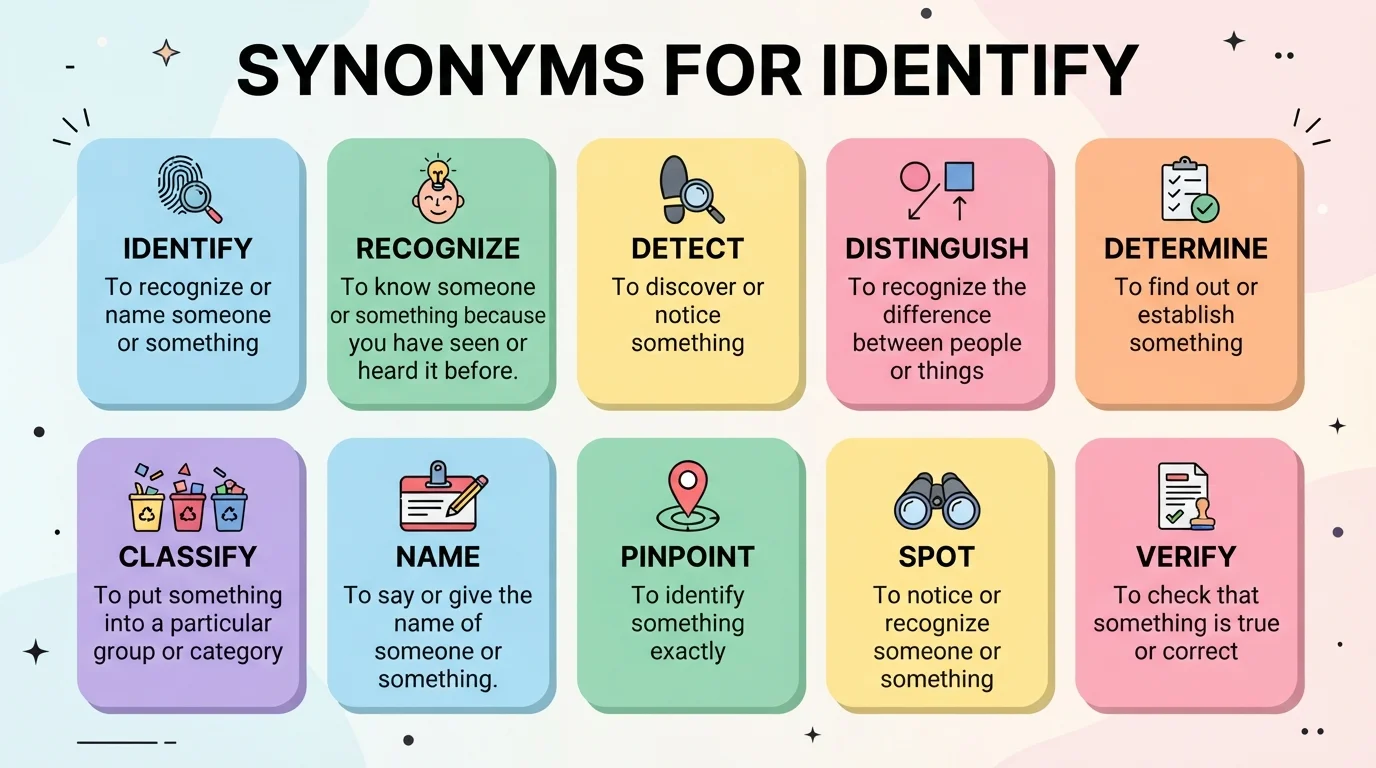
Have you ever struggled to find the exact word while describing someone or something? Picture yourself writing an essay or a blog post, and you keep using the word “identify” over and over again. It gets repetitive fast! To identify simply means to recognize, point out, or name what something is.
Learning fresh synonyms for “identify” is a game-changer. Students can use the right words to write better essays. Bloggers and content writers can use them to make their content easy to read and interesting. In everyday conversations, the right words help people speak clearly and naturally. Let’s explore 50 great ways to say “identify” in your writing and speech.
50 Synonyms for Identify
1. Recognize
Meaning: To identify someone or something that you have seen or heard before.
Examples:
- I can easily recognize my best friend in a crowd.
2. Detect
Meaning: To notice or discover something that is difficult to see or find.
Example:
The doctor used a test to detect the problem early.
- Examples:
- The smoke alarm can detect small fires quickly.
- The doctor tried to detect the cause of my headache.
3. Pinpoint
Meaning: To find or show the exact position, time, or reason for something.
- Examples:
- We need to pinpoint the leak in the water pipe.
- She was able to pinpoint the exact date on the map.
4. Locate
Meaning: To find the exact place or position of something.
- Examples:
- Can you help me locate my lost keys?
- The app helps users locate nearby coffee shops.
5. Spot
Meaning: To see or notice someone or something suddenly.
- Examples:
- I managed to spot a red bird on the tree.
- He was the first person to spot the error on the page.
6. Distinguish
Meaning: To notice or understand the difference between two things.
- Examples:
- Young children learn to distinguish right from wrong.
- It was hard to distinguish the twins apart.
7. Name
Meaning: To say the specific word or title for a person or thing.
- Examples:
- Can you name all the state capitals?
- Please name the person who helped you today.
8. Discover
Meaning: To find something for the first time.
- Examples:
- Scientists hope to discover new planets in space.
- I discovered a great new book at the shop.
9. Classify
Meaning: To put things into groups based on their type or traits.
- Examples:
- Librarians classify books by subject and author.
- Scientists classify animals into different families.
10. Label
Meaning: To attach a word or tag to describe something clearly.
- Examples:
- Be sure to label each box before moving.
- They labeled the file so it was easy to find.
11. Determine
Meaning: To find out the exact facts or truth about something.
- Examples:
- Tests will determine the cause of the problem.
- We must determine the best path to take.
12. Diagnose
Meaning: To figure out what illness or problem someone or something has.
- Examples:
- The mechanic worked to diagnose the engine trouble.
- A doctor can diagnose your fever quickly.
13. Pick out
Meaning: To choose or recognize one specific thing from a group.
- Examples:
- Pick out the shirt you want to wear today.
- She was able to pick out her bag from the pile.
14. Single out
Meaning: To choose one person or thing for special attention.
- Examples:
- The teacher did not single out any student for praise.
- Do not single out one mistake when looking at the whole plan.
15. Categorize
Meaning: To place items into groups that share similar details.
- Examples:
- You can categorize these files by date.
- The store categorizes items by price range.
16. Define
Meaning: To state or explain the exact meaning of something.
- Examples:
- The dictionary helps define new words.
- Please define your goals for the year.
17. Discern
Meaning: To see, hear, or understand something with effort.
- Examples:
- I could discern a faint light through the fog.
- It was difficult to discern the true story.
18. Specify
Meaning: To state clearly and in detail what is needed.
- Examples:
- Please specify which color you prefer.
- The rules specify that you must arrive early.
19. Perceive
Meaning: To notice or become aware of something using your senses.
- Examples:
- Cats can perceive tiny movements in the dark.
- I perceive a change in his attitude today.
20. Mark
Meaning: To put a symbol on something so you can find it later.
- Examples:
- Mark the correct answer with a red pen.
- Use a bookmark to mark your page.
21. Characterize
Meaning: To describe the typical qualities of a person or thing.
- Examples:
- Bright colors characterize her art style.
- Hard work characterizes this team.
22. Notice
Meaning: To see, hear, or feel something around you.
- Examples:
- Did you notice the new paint on the wall?
- I notice a small sound coming from the clock.
23. Observe
Meaning: To watch someone or something carefully.
- Examples:
- Students observe the plant growth each week.
- The guard will observe the door closely.
24. Find
Meaning: To get or see something you were looking for.
- Examples:
- Did you find your missing coat yet?
- I hope to find a good solution soon.
25. Uncover
Meaning: To find facts or information that were hidden.
- Examples:
- The reporter tried to uncover the true story.
- Digging helped uncover old tools in the garden.
26. Trace
Meaning: To follow the path or origin of something back to the start.
- Examples:
- Police can trace the call to a local building.
- She tried to trace her family history.
27. Isolate
Meaning: To find and separate one specific part from others.
- Examples:
- The lab worker tried to isolate the bug.
- We need to isolate the main cause of the error.
28. Differentiate
Meaning: To show or see how two things are not the same.
- Examples:
- Bright labels help differentiate the two products.
- Good taste helps differentiate fresh food from canned food.
29. Isolate
Meaning: To mark one thing apart from the rest.
- Examples:
- You should isolate the broken wire first.
- The team worked to isolate the main glitch.
30. Describe
Meaning: To say what someone or something is like.
- Examples:
- Please describe the missing dog to the officer.
- Words cannot describe how pretty this view is.
31. Catalog
Meaning: To make a complete and organized list of items.
- Examples:
- We must catalog all the books in the room.
- The museum cataloged the ancient coins.
32. Tag
Meaning: To attach a label or marker to an item.
- Examples:
- Remember to tag your luggage before travel.
- The system will tag new emails as unread.
33. Flag
Meaning: To mark something so it gets special attention.
- Examples:
- Flag any spelling mistakes in the draft.
- The system will flag unusual account activity.
34. Reveal
Meaning: To show or make known something secret or hidden.
- Examples:
- The test results reveal the truth.
- The sun began to reveal the hidden mountain path.
35. Make out
Meaning: To manage to see or hear something clearly.
- Examples:
- I can barely make out the sign in the dark.
- Can you make out what he is saying?
36. Verify
Meaning: To check and prove that something is correct.
- Examples:
- Please verify your address on this form.
- The guard must verify your ID at the gate.
37. Unearth
Meaning: To find something that was hidden or buried.
- Examples:
- Workers unearth old bones near the river.
- The research helped unearth forgotten facts.
38. Indicate
Meaning: To point out or show something clearly.
- Examples:
- A green light indicates that it is safe to go.
- Signs indicate where to park your car.
39. Detail
Meaning: To list or explain all parts of something clearly.
- Examples:
- The report will detail the whole plan step by step.
- He will detail his thoughts in the morning meeting.
40. Sight
Meaning: To catch sight of or see something specific.
- Examples:
- The sailors sight land after many days at sea.
- We hope to sight wild deer on our walk.
41. Select
Meaning: To carefully choose something from a group.
- Examples:
- Select the option that works best for you.
- You can select three items from the list.
42. Confirm
Meaning: To prove that something is true or correct.
- Examples:
- Please call to confirm your appointment time.
- The test will confirm if the machine works.
43. Note
Meaning: To notice or pay attention to a specific detail.
- Examples:
- Please note the change in our business hours.
- I note a small error on the front cover.
44. Register
Meaning: To record or notice details in an official way.
- Examples:
- The scale will register your total weight.
- Did you register the change in temperature?
45. Place
Meaning: To remember who someone is or where you saw them.
- Examples:
- I know her face, but I cannot place her name.
- It was hard to place where I heard that sound.
46. Nameplate
Meaning: To identify a place or object by adding a name tag.
- Examples:
- They will nameplate the door with his title.
- Each desk is nameplated for the event.
47. Chart
Meaning: To map out or point out data clearly.
- Examples:
- We must chart our progress on the wall.
- The map will chart the course of the ship.
48. Mark out
Meaning: To draw lines or points to show where something is.
- Examples:
- Use chalk to mark out the playing area.
- They will mark out where the wall should go.
49. Expose
Meaning: To show something that was hidden from view.
- Examples:
- The light will expose the dust in the air.
- The news will expose the full story tonight.
50. Key in on
Meaning: To focus directly on one important thing.
- Examples:
- The detective will key in on the main clue.
- Writers must key in on what readers want.
FAQs
1. What is the best daily synonym for identify?
The word “recognize” is the most common and versatile replacement in everyday speech.
2. Can “detect” always replace “identify”?
No, “detect” is best used when finding hidden things, while “identify” means naming or recognizing them clearly.
3. How does using synonyms improve SEO writing?
Synonyms prevent keyword stuffing, improve user reading experience, and help search engines understand content context.
4. Which synonym for “identify” is best for academic essays?
Words like “pinpoint,” “determine,” and “differentiate” work exceptionally well in formal academic papers.
5. Are “classify” and “identify” exact synonyms?
They are close, but “identify” means pointing out what something is, while “classify” means grouping it by type.
6. How can I practice these synonyms daily?
Try replacing the word “identify” with a new synonym in your emails, texts, or daily speech exercises.
Conclusion
Learning new synonyms for “identify” is a fast way to elevate your English skills. Using varied vocabulary keeps your writing dynamic, makes your blog posts more SEO-friendly, and helps you communicate with total clarity. Whether you are drafting an email, crafting an essay, or chatting with friends, trying out words like “pinpoint,” “detect,” or “recognize” will make your message far more engaging. Start practicing a few of these synonyms today!

I’m Ethan Cole, a passionate vocabulary writer at LexiBoost, where I help readers understand English words in a simpler and smarter way. I enjoy exploring synonyms, antonyms, and word meanings while creating easy-to-follow content that improves everyday communication