50 Power-Packed Synonyms
Have you ever wanted to describe a serious moment, but the word “serious” just felt too weak? Imagine a doctor walking into a waiting room with a heavy look on his face. The room goes quiet because everyone knows the situation is grave. The word “grave” helps you express deep seriousness, heavy danger, or extreme importance.
Learning synonyms for grave makes your writing much stronger. Whether you are a student writing an essay, a blogger drafting a post, a content writer aiming for impact, or someone who wants to speak better English, having the right words matters. When you use diverse synonyms for “grave,” your sentences become clear, vivid, and memorable. Let’s explore 50 excellent synonyms for “grave” that you can start using today!
50 Best Synonyms for Grave
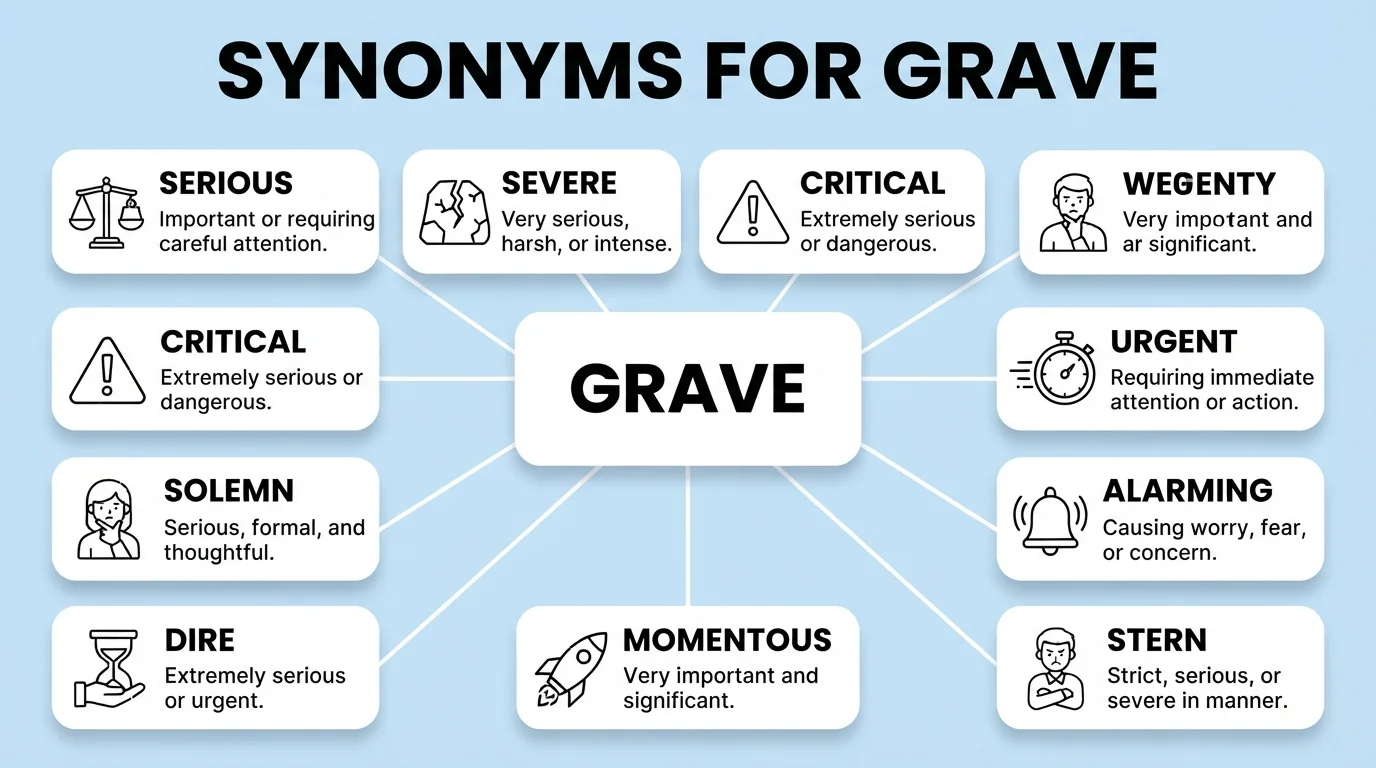
1. Serious
Meaning: This word describes something that is very important and not a joke.
Examples:
- We need to have a serious talk about your safety.
- Her sudden illness is a serious matter for the whole family.
2. Severe
Meaning: This word means very harsh, bad, or painful.
Examples:
- The storm caused severe damage to the small town.
- He suffered a severe headache after working all day.
3. Critical
Meaning: This word describes a moment of great danger or extreme importance.
Examples:
- The patient is in critical condition at the hospital.
- Water supply reached a critical point during the dry summer.
4. Solemn
Meaning: This word means deeply serious, formal, and quiet.
Examples:
- The crowd kept a solemn silence during the ceremony.
- He made a solemn promise to protect his younger sister.
5. Somber
Meaning: This word describes a mood or look that is dark, sad, and quiet.
Examples:
- Everyone wore dark clothes and had somber faces.
- The news put us all in a somber mood.
6. Urgent
Meaning: This word means something needs immediate attention or quick action.
Examples:
- She sent an urgent message to her doctor this morning.
- We have an urgent problem that we must fix right now.
7. Weighty
Meaning: This word describes something that carries great importance or heavy impact.
Examples:
- The judge made a weighty decision about the case.
- She carries a weighty responsibility on her young shoulders.
8. Grim
Meaning: This word means dark, harsh, and without any joy.
Examples:
- The captain gave us a grim report about the weather.
- He looked at the broken car with a grim smile.
9. Dire
Meaning: This word describes a terrible situation with very bad results.
Examples:
- The village is in dire need of fresh water.
- Ignoring the warning signs led to dire consequences.
10. Dreadful
Meaning: This word means very bad, shocking, or causing great fear.
Examples:
- We heard the dreadful news about the train accident.
- The rainy weather caused a dreadful delay in our trip.
11. Momentous
Meaning: This word describes an event that has a huge impact on the future.
Examples:
- Graduating from college was a momentous day in her life.
- The two countries signed a momentous peace agreement.
12. Crucial
Meaning: This word means extremely important for the success of something.
Examples:
- Good sleep is crucial for your health and growth.
- Taking notes is a crucial step when studying for tests.
13. Acute
Meaning: This word means very sharp, strong, or sudden in effect.
Examples:
- He felt an acute pain in his right leg.
- The town faces an acute shortage of clean food.
14. Severe-minded
Meaning: This word describes a person who thinks in a strict and firm way.
Examples:
- The teacher was severe-minded when dealing with late homework.
- He gave a severe-minded lecture on honesty.
15. Heavy
Meaning: This word can mean full of sadness, seriousness, or deep concern.
Examples:
- She left the room with a heavy heart after saying goodbye.
- There was a heavy feeling in the air before the test.
16. Threatening
Meaning: This word describes something that shows signs of danger or harm.
Examples:
- Dark gray clouds looked threatening above the beach.
- He received a threatening letter from his angry neighbor.
17. Dangerous
Meaning: This word means able to cause hurt, damage, or loss.
Examples:
- Driving fast on icy roads is very dangerous.
- The wild river is too dangerous for young kids to swim in.
18. Perilous
Meaning: This word describes a situation full of high risk and danger.
Examples:
- The hikers made a perilous climb up the snowy mountain.
- They started a perilous journey across the thick jungle.
19. Life-threatening
Meaning: This word means capable of causing someone to die.
Examples:
- The driver suffered life-threatening injuries in the crash.
- Eating raw wild plants can lead to life-threatening sickness.
20. Staid
Meaning: This word describes someone who is quiet, calm, and very serious.
Examples:
- The old law firm had a very staid atmosphere.
- He maintained a staid tone during the entire meeting.
21. Sedate
Meaning: This word means calm, quiet, and slow-moving without excitement.
Examples:
- We took a sedate walk through the peaceful park.
- The party was very sedate compared to last year.
22. Deep
Meaning: This word describes thoughts or feelings that are strong and serious.
Examples:
- He was lost in deep thought about his future plans.
- They shared a deep sadness after losing their old dog.
23. Major
Meaning: This word means very large, important, or serious.
Examples:
- The company faces a major challenge this month.
- Traffic came to a stop due to a major road repair.
24. Pressing
Meaning: This word describes a task or topic that needs action right away.
Examples:
- Fixing the leaking roof is our most pressing job today.
- The board met to talk about a pressing money issue.
25. High-stakes
Meaning: This word describes a situation where you can win or lose a lot.
Examples:
- The final game was a high-stakes match for the team.
- Buying a house is a high-stakes decision for young couples.
26. Fatal
Meaning: This word means causing ruin, failure, or death.
Examples:
- Making one fatal mistake cost them the entire game.
- The snake bite proved to be fatal to the small rat.
27. Grievous
Meaning: This word describes something that causes deep pain, grief, or harm.
Examples:
- The family suffered a grievous loss during the fire.
- He made a grievous error on his final tax forms.
28. Devastating
Meaning: This word means causing great destruction or deep emotional pain.
Examples:
- The hurricane brought devastating damage to the coast.
- She heard the devastating news and started to cry.
29. Catastrophic
Meaning: This word describes a sudden event that causes complete disaster.
Examples:
- An engine failure could cause a catastrophic crash.
- The floods had a catastrophic effect on local farms.
30. Extreme
Meaning: This word means reaching a very high degree or severe level.
Examples:
- The runner collapsed due to extreme heat outside.
- The village lives under extreme weather conditions.
31. Meaningful
Meaning: This word describes something full of deep purpose or importance.
Examples:
- They had a meaningful chat about their long-term goals.
- She wants to do meaningful work that helps poor people.
32. Substantial
Meaning: This word means large in size, value, or importance.
Examples:
- The store suffered a substantial loss of sales.
- He made a substantial donation to the local shelter.
33. Vital
Meaning: This word means absolutely necessary for life or success.
Examples:
- Clean water is vital for every living creature on Earth.
- Daily practice is vital if you want to speak fluent English.
34. Essential
Meaning: This word describes something you must have and cannot do without.
Examples:
- Food, water, and shelter are essential human needs.
- Good planning is essential for a successful road trip.
35. Earnest
Meaning: This word describes a person or statement that is completely honest and sincere.
Examples:
- He made an earnest effort to apologize for his mistake.
- Her earnest words convinced the group to help out.
36. Sober
Meaning: This word means calm, serious, and sensible in thought or action.
Examples:
- The news gave us a sober look at the real situation.
- He gave a sober assessment of our sports team’s chances.
37. Severe-looking
Meaning: This word describes an appearance that looks stern, hard, or strict.
Examples:
- A severe-looking man stood guard at the front entrance.
- She had a severe-looking expression when reading the bill.
38. Stern
Meaning: This word means strict, firm, and unyielding in tone or look.
Examples:
- My dad gave me a stern look when I broke the cup.
- The teacher used a stern voice to quiet the classroom.
39. Strict
Meaning: This word means following rules exactly and demanding complete obedience.
Examples:
- The school has strict rules against using phones in class.
- Our coach is very strict during daily training sessions.
40. Harassing
Meaning: This word describes something that creates heavy pressure, stress, or worry.
Examples:
- The team faced harassing problems while building the bridge.
- Constant debt can create a harassing atmosphere at home.
41. Alarming
Meaning: This word describes something that causes sudden fear or worry.
Examples:
- There was an alarming drop in temperature last night.
- The report showed an alarming rise in water pollution.
42. Shocking
Meaning: This word means causing great surprise, upset, or disbelief.
Examples:
- The book revealed a shocking truth about the old case.
- It was shocking to see how fast the water rose.
43. Troubling
Meaning: This word describes something that makes you feel anxious, sad, or worried.
Examples:
- The doctor gave us some troubling news about the test.
- We noticed a troubling trend in rising electricity costs.
44. Worrying
Meaning: This word means causing you to feel uneasy or concerned.
Examples:
- It is worrying that the dog has not eaten all day.
- The lack of rain is a worrying sign for local farmers.
45. Bleak
Meaning: This word describes a situation that looks cold, hopeless, and empty.
Examples:
- The future looked bleak after he lost his job.
- It was a bleak winter morning with heavy gray fog.
46. Uncompromising
Meaning: This word means firm and unwilling to change your mind or lower standards.
Examples:
- The boss showed uncompromising standards for product quality.
- He held an uncompromising attitude during the debate.
47. Rigid
Meaning: This word describes something that is very stiff, firm, and not flexible.
Examples:
- The company follows a rigid schedule for daily work.
- He maintained a rigid stance on the school rules.
48. Demanding
Meaning: This word describes a task or role that takes a lot of effort, time, or focus.
Examples:
- Teaching young kids can be a very demanding job.
- The athlete faced a demanding training schedule this week.
49. Hazardous
Meaning: This word means involving strong risks to safety or health.
Examples:
- Cleaning chemical spills is a hazardous task for workers.
- Thick ice made walking on the steps very hazardous.
50. High-priority
Meaning: This word describes something that is more important than other things.
Examples:
- Fixing the internet connection is a high-priority task.
- The team put all high-priority jobs at the top of the list.
FAQs
1. What is the most common synonym for grave?
The most common synonym for “grave” is “serious,” as both words describe severe or important situations.
2. Can the word “grave” be used as a noun and an adjective?
Yes, “grave” is an adjective meaning “serious,” but as a noun, it means “a place where a body is buried.”
3. How does “solemn” differ from “grave”?
“Solemn” focuses more on quiet, formal, and sacred seriousness, while grave highlights danger, importance, or heavy worry.
4. What is a good synonym for grave when describing danger?
Words like “perilous,” “critical,” or “dire” are best when using grave to describe dangerous situations.
5. Is “severe” always a direct replacement for “grave”?
“Severe” works well for describing intense pain, bad weather, or harsh damage, making it a great alternative to grave.
6. Why should content writers use synonyms for grave?
Using different synonyms for grave keeps your writing fresh, avoids repetitive words, and improves SEO readability.
Conclusion
Learning fresh synonyms for “grave” is a simple way to elevate your everyday English skills. Adding words like “critical,” “solemn,” “dire,” and “crucial” to your vocabulary helps you express complex feelings with precision. Whether you are typing professional emails, drafting school essays, publishing blog posts, or talking with friends, choosing the right word makes your message clear and powerful. Start practicing a few of these synonyms in your writing today and watch your communication skills grow!

I’m Sophia Carter, and I love researching English words and turning them into simple, useful vocabulary guides for learners. I enjoy exploring synonyms, alternative word choices, and sentence improvement tips that help people write more naturally and professionally.