Imagine sitting in a local, minimalist cafe. A person next to you orders a “deconstructed, ethically sourced oat milk matcha latte” while casually adjusting their designer sunglasses indoors. You chuckle to yourself and think, Wow, that is so bougie.
The word “bougie” a modern, casual shorthand derived from the French Marxist term bourgeoisie has taken over our everyday communication skills. It perfectly captures that specific blend of high end consumerism, pretension, and a distinct taste for luxury.
But when you are working on expressive writing or trying to sharpen your English vocabulary, leaning on the same trendy slang over and over again drains the flavor from your prose. Repeating “bougie” makes writing feel repetitive and stuck in a specific internet era. By expanding your word choice, you unlock the ability to paint much clearer pictures.
If you want to gently mock a friend’s fancy coffee habits or describe a truly elegant, old-money estate, replacing slang with precise alternatives massively improves your language skills.
What is Another Word for “Bougie”?
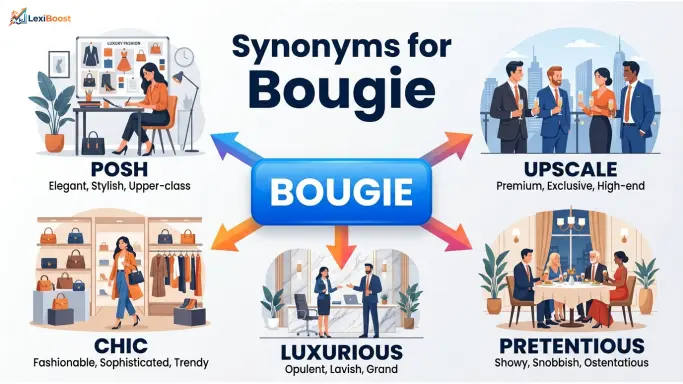
The most direct, everyday synonym for bougie is fancy. It captures the core idea of something being upscale or high-quality without being overtly insulting.
However, because bougie carries a mix of wealth and attitude, a single alternative won’t always fit. Here are a few strong options depending on your context:
- Pretentious: Use this when someone is trying too hard to seem cultured or wealthy just to impress others.
- Upscale: Perfect for describing businesses, neighborhoods, or events that cater to high-income tastes.
- High-maintenance: Best for describing a person whose taste for luxury requires a lot of effort, time, or money to satisfy.
- Ostentatious: Ideal when the display of wealth is loud, vulgar, and designed to draw attention.
Quick Reference: 30 Alternatives to Bougie
| Synonym | One-Line Meaning |
| 1. Fancy | Ornamental, high-quality, or sophisticated. |
| 2. Posh | Elegant, stylish, and typically associated with the upper class. |
| 3. High-toned | Characterized by an aristocratic, dignified, or superior tone. |
| 4. Ritzy | Luxuriously elegant or glamorous in a flashy way. |
| 5. Pretentious | Attempting to impress by affecting greater importance than is possessed. |
| 6. Uppity | Arrogant, self-important, or putting on airs above one’s station. |
| 7. Swanky | Elegantly luxurious and expensive; fashionable. |
| 8. Affluent | Having a great deal of money; wealthy. |
| 9. Elitist | Demonstrating a belief that a certain group deserves superior treatment. |
| 10. High-flown | Extravagant, grand, or puffed up with pride. |
| 11. Ostentatious | Designed to impress or attract notice in an vulgar way. |
| 12. Splendid | Magnificent, grand, and impressive in appearance. |
| 13. High-maintenance | Demanding a massive amount of upkeep, luxury, or attention. |
| 14. Opulent | Ostentatiously costly, luxurious, and wealthy. |
| 15. Snobbish | Patronizingly looking down on those deemed socially inferior. |
| 16. Grandiose | Impressive or magnificent in appearance, often excessively so. |
| 17. Lavish | Sumptuously rich, elaborate, or given in great quantities. |
| 18. Highbrow | Intellectual, cultured, and favoring refined tastes. |
| 19. Chic | Elegantly and stylishly fashionable. |
| 20. Premium | Of superior quality and higher value than standard options. |
| 21. Exclusive | Restrictive, high-end, and catering to a select wealthy clientele. |
| 22. Sumptuous | Splendid and expensive-looking. |
| 23. Luxe | Luxurious, expensive, and high-quality. |
| 24. Elegant | Pleasingly graceful, stylish, and refined in appearance or manner. |
| 25. Showy | Making an ostentatious or superficial display. |
| 26. Aristocratic | Relating to, belonging to, or characteristic of the nobility. |
| 27. High-class | Of superior social status, quality, or excellence. |
| 28. Genteel | Polite, refined, or respectable, often in an affected way. |
| 29. Flamboyant | Tending to attract attention because of exuberance or style. |
| 30. Luxurious | Providing great comfort, beauty, and expense. |
30 Detailed Synonyms for “Bougie”
1. Fancy
- Meaning: Ornamental, high-quality, or sophisticated.
- Explanation: Fancy is the ultimate chameleon of vocabulary enhancement. It lacks the sharp, judgmental bite of “bougie,” making it safer for general use. It can range from lighthearted teasing to genuine praise. Use it when describing decorated pastries, dressed-up outfits, or elevated environments where no offense is intended.
- Examples:
- They went to a fancy restaurant downtown to celebrate their anniversary.
- She wore a fancy dress that looked like it belonged on a runway.
2. Posh
- Meaning: Elegant, stylish, and typically associated with the upper class.
- Explanation: This word carries a distinctly British flavor, evoking images of old manor houses, accents, and high society. While bougie implies someone trying or pretending to be upper class by buying trendy things, posh usually implies that the luxury is effortless, baked-in, or genuinely high-status.
- Examples:
- He spoke with a posh accent that immediately gave away his private school background.
- The hotel lounge was incredibly posh, filled with velvet armchairs and crystal chandeliers.
3. High-toned
- Meaning: Characterized by an aristocratic, dignified, or superior tone.
- Explanation: This is a more formal, literary alternative. It carries an intellectual and moral weight that bougie lacks. High-toned describes people, publications, or events that carry themselves with an air of superior culture, sometimes crossing over into aloofness or self-righteousness.
- Examples:
- The magazine was known for its high-toned editorial pieces on art history.
- She gave a high-toned speech that left the casual audience feeling a bit alienated.
4. Ritzy
- Meaning: Luxuriously elegant or glamorous in a flashy way.
- Explanation: Derived from the famous Ritz hotels, this word sits comfortably between formal and informal. It describes places or lifestyles that are undeniably expensive and glamorous, often with a slight tint of showiness. It matches the material focus of bougie perfectly.
- Examples:
- They threw a ritzy gala at the penthouse, complete with ice sculptures.
- Driving a sports car through that ritzy neighborhood made him feel out of place.
5. Pretentious
- Meaning: Attempting to impress by affecting greater importance than is possessed.
- Explanation: This is the direct psychological core of bougie. While bougie mocks the physical habits (like drinking artisanal water), pretentious attacks the mindset. It is highly critical and used when someone acts more educated, wealthy, or artistic than they actually are.
- Examples:
- His pretentious critique of the local indie film annoyed everyone at the dinner table.
- The gallery’s exhibition description was so pretentious it barely made sense.
6. Uppity
- Meaning: Arrogant, self-important, or putting on airs above one’s station.
- Explanation: This word is deeply informal and highly charged. It carries a negative tone, used to describe someone who acts superior to their peers or forgets their humble roots. Use this word with extreme caution, as it carries historical, racially charged undertones in American English.
- Examples:
- Ever since her promotion, she’s been acting a bit uppity around her old coworkers.
- The neighborhood association president had an uppity attitude about lawn care.
7. Swanky
- Meaning: Elegantly luxurious and expensive; fashionable.
- Explanation: Swanky is a fun, vibrant adjective with a confident tone. It is used positively or with mild envy to describe places that are deeply fashionable, modern, and expensive—like a rooftop jazz lounge or a boutique hotel.
- Examples:
- We grabbed cocktails at a swanky lounge overlooking the city skyline.
- He moved into a swanky new apartment building with a private gym.
8. Affluent
- Meaning: Having a great deal of money; wealthy.
- Explanation: This is a formal, objective, and neutral term. Unlike bougie, which judges consumer behavior, affluent simply describes economic status. It is ideal for journalism, business writing, or sociological descriptions of wealthy areas.
- Examples:
- The university is located in a highly affluent suburb of Chicago.
- Marketers frequently target affluent households for luxury travel packages.
9. Elitist
- Meaning: Demonstrating a belief that a certain group deserves superior treatment.
- Explanation: Elitist moves away from material wealth and zeroes in on social structures and snobbery. It implies that a person or institution looks down on the general public, believing only a select few are worthy of certain privileges, tastes, or spaces.
- Examples:
- The club’s admission policy was criticized for being outdated and elitist.
- He held an elitist view that only classical music was worth listening to.
10. High-flown
- Meaning: Extravagant, grand, or puffed up with pride.
- Explanation: A slightly archaic but highly descriptive word. It refers to language, ideals, or ambitions that are overly lofty, grand, and romanticized. It perfectly describes someone speaking with a level of grandiosity that feels disconnected from real life.
- Examples:
- I couldn’t follow his high-flown political theories during our casual chat.
- She had high-flown ambitions of changing the industry overnight without doing the grunt work.
11. Ostentatious
- Meaning: Designed to impress or attract notice in a vulgar way.
- Explanation: This is a heavy, formal word used to criticize people who flaunt their money. While someone might be quietly bougie by buying expensive bed sheets, an ostentatious person buys a gold-plated sports car just so everyone looks at them.
- Examples:
- The celebrity’s ostentatious display of wealth rubbed his working-class fans the wrong way.
- They built an ostentatious mansion that completely clashed with the modest neighborhood.
12. Splendid
- Meaning: Magnificent, grand, and impressive in appearance.
- Explanation: A classic, universally positive word. It describes true elegance, beauty, and grandeur without any of the negative social baggage of bougie. It feels timeless and highly respectful.
- Examples:
- The view from the top of the mountain was absolutely splendid.
- She hosted a splendid dinner party that everyone talked about for weeks.
13. High-maintenance
- Meaning: Demanding a massive amount of upkeep, luxury, or attention.
- Explanation: This is a conversational, psychological alternative. A bougie person often becomes high-maintenance because their specific, upscale tastes mean they cannot handle standard, everyday accommodations without complaining.
- Examples:
- Traveling with him is exhausting because he is so high-maintenance about hotels.
- That exotic sports car is incredibly high-maintenance and requires specialized mechanics.
14. Opulent
- Meaning: Ostentatiously costly, luxurious, and wealthy.
- Explanation: Opulent sits safely in the formal tier, used to describe extreme, heavy wealth. Think of palace rooms dripping in gold leaf, heavy silk drapery, and massive marble pillars. It focuses entirely on physical grandeur.
- Examples:
- The tycoon lived an opulent lifestyle that few could ever dream of.
- We attended a gala inside an opulent ballroom from the nineteenth century.
15. Snobbish
- Meaning: Patronizingly looking down on those deemed socially inferior.
- Explanation: This is a direct character flaw. While bougie describes a lifestyle preference, snobbish describes a hostile social attitude. A snobbish person actively devalues others because of their lower income, lack of education, or unrefined tastes.
- Examples:
- The sommelier was quite snobbish when we asked for a cheaper wine recommendation.
- She made a snobbish remark about people who shop at discount grocery stores.
16. Grandiose
- Meaning: Impressive or magnificent in appearance, often excessively so.
- Explanation: Grandiose implies that something is scaled up to an absurd degree. It is often used to describe plans, ideas, or architecture that are so large, ambitious, or theatrical that they feel slightly ridiculous or ungrounded.
- Examples:
- The dictator drew up grandiose plans for a monument dedicated to himself.
- He was prone to grandiose statements about his own intelligence.
17. Lavish
- Meaning: Sumptuously rich, elaborate, or given in great quantities.
- Explanation: This word can describe a lifestyle or an act of giving. A lavish party features overflowing champagne and endless food. It carries a tone of generosity, though it can cross into wastefulness if overdone.
- Examples:
- The company showered its top executives with lavish gifts and bonuses.
- They lived a lavish life funded entirely by inheritance.
18. Highbrow
- Meaning: Intellectual, cultured, and favoring refined tastes.
- Explanation: This term shifts the focus from money to intellect and high culture. A bougie person buys things for status; a highbrow person consumes things for intellectual validation, like avant-garde theater, literature, or classical philosophy.
- Examples:
- The film festival leaned heavily toward highbrow, experimental cinema.
- His highbrow taste in literature made it hard to recommend casual beach reads to him.
19. Chic
- Meaning: Elegantly and stylishly fashionable.
- Explanation: Borrowed from French, chic is a highly positive, trendy term in the fashion and design worlds. It describes effortless style. While bougie can look like someone is trying too hard, chic looks like they woke up looking perfectly put together.
- Examples:
- She looked incredibly chic in her simple black trench coat and sunglasses.
- The boutique hotel featured a minimalist, chic interior design.
20. Premium
- Meaning: Of superior quality and higher value than standard options.
- Explanation: This is a commercial, professional word. It strips away all emotional judgment and focuses on market value and build quality. It is widely used in business writing, marketing, and product descriptions.
- Examples:
- Customers are willing to pay more for premium ingredients sourced locally.
- The streaming service offers a premium tier with no advertisements.
21. Exclusive
- Meaning: Restrictive, high-end, and catering to a select wealthy clientele.
- Explanation: This word highlights the boundary lines of luxury. Exclusive spaces use high prices, guest lists, or memberships to keep the general public out. It emphasizes the social isolation that bougie people often crave.
- Examples:
- They secured a table at an exclusive club that requires a yearly membership.
- The designer released an exclusive collection available only in three cities.
22. Sumptuous
- Meaning: Splendid and expensive-looking.
- Explanation: This is a sensory, literary adjective. It is most frequently used to describe things that appeal to the senses—like a rich feast, heavy velvet robes, or deeply layered orchestral music. It implies comforting, expensive indulgence.
- Examples:
- We sat down to a sumptuous feast of roasted meats and fine pastries.
- The theater was decorated with sumptuous fabrics and gilded trimmings.
23. Luxe
- Meaning: Luxurious, expensive, and high-quality.
- Explanation: A modern, clipped shorthand for luxury, luxe is used heavily in contemporary marketing, lifestyle blogging, and casual writing. It feels sleek, current, and carries a highly positive aesthetic vibe.
- Examples:
- The brand specializes in creating a luxe experience for budget-conscious travelers.
- Her apartment was filled with luxe touches like marble coasters and silk pillows.
24. Elegant
- Meaning: Pleasingly graceful, stylish, and refined in appearance or manner.
- Explanation: The gold standard of positive vocabulary refinement. Elegant describes simplicity, timelessness, and dignity. It is completely devoid of the try-hard energy or material vanity associated with being bougie.
- Examples:
- Her grandmother wore a simple, elegant pearl necklace to the dinner.
- The solution to the complex math problem was surprisingly elegant.
25. Showy
- Meaning: Making an ostentatious or superficial display.
- Explanation: This is a simple, highly visual word. It is critical but uses plain language. A showy object or person focuses entirely on getting eyes on them, often sacrificing true taste or quality just to be bright and noticeable.
- Examples:
- He wore a showy gold watch that kept catching the light during the meeting.
- The garden was filled with showy, bright flowers that bloomed all at once.
26. Aristocratic
- Meaning: Relating to, belonging to, or characteristic of the nobility.
- Explanation: This word ties luxury directly to bloodlines, history, and institutional class. While a bougie person represents new money climbing the social ladder, an aristocratic person represents generations of inherited wealth, power, and deeply entrenched social codes.
- Examples:
- The family maintained an old, aristocratic pride despite losing their fortune.
- He carried himself with an aristocratic aloofness that made him hard to approach.
27. High-class
- Meaning: Of superior social status, quality, or excellence.
- Explanation: A traditional, clear descriptor. It can apply to products, services, or behaviors. It is professional and neutral, making it highly effective when you want to convey high quality without using slang.
- Examples:
- The agency provides high-class catering services for corporate events.
- She always handled difficult business negotiations in a high-class manner.
28. Genteel
- Meaning: Polite, refined, or respectable, often in an affected way.
- Explanation: Genteel carries an old-fashioned, delicate tone. It describes an upper-class politeness that can sometimes feel forced, fragile, or desperate to maintain appearances, even if the underlying wealth is gone.
- Examples:
- They lived in a state of genteel poverty, trying to keep up appearances on a tiny budget.
- The afternoon tea party was a quiet, genteel affair filled with polite small talk.
29. Flamboyant
- Meaning: Tending to attract attention because of exuberance or style.
- Explanation: Unlike snobbish or pretentious words, flamboyant focuses on energy, color, and theatricality. A flamboyant display of luxury isn’t necessarily mean-spirited; it is loud, joyful, and impossible to ignore.
- Examples:
- The rock star was famous for his flamboyant capes and oversized sunglasses.
- She designed the hotel lobby with a flamboyant mix of neon signs and animal prints.
30. Luxurious
- Meaning: Providing great comfort, beauty, and expense.
- Explanation: This is the bedrock word for high-end living. It focuses heavily on comfort, relaxation, and top-tier quality. It is professional, descriptive, and entirely free of the social mockery built into the slang term bougie.
- Examples:
- We spent a luxurious weekend at a spa resort tucked away in the mountains.
- The car’s interior was made of a soft, luxurious leather.
Formal vs. Informal Synonyms
Understanding the divide between formal and informal language is crucial for effective communication skills. Using “bougie” in a corporate presentation or an academic essay will damage your writing’s authority. Conversely, using “ostentatious” at a casual backyard barbecue might make you sound stiff.
Formal Synonyms
These words belong in professional writing, essays, journalism, and business contexts. They focus on economic reality or objective behavioral analysis:
- Affluent
- Opulent
- Ostentatious
- Pretentious
- Exclusive
Informal Synonyms
These words are perfect for creative writing, casual conversations, texting, or blogging. They carry personal opinions, humor, and emotional color:
- Ritzy
- Swanky
- Luxe
- Posh
- High-maintenance
Frequently Asked Questions
What is the origin of the word bougie?
It is a short slang form of bourgeois or bourgeoisie, a French term historically used to describe the materialistic middle-to-upper class who own property and capital.
Is calling someone bougie an insult?
It depends on the tone. It can be a lighthearted poke at someone’s fancy habits, but it can also be a mild insult targeting pretentiousness or vanity.
Can I use the word posh instead of bougie?
Yes, but keep geography in mind. Posh carries a strong British or Commonwealth association, while bougie is predominantly used in American slang.
What is a good business term to replace bougie?
In marketing or corporate communications, replace it with premium, upscale, exclusive, or high-end to maintain professional writing standards.
What does highbrow mean compared to bougie?
Highbrow refers strictly to intellectual and cultural sophistication (like literature and classical art), while bougie focuses primarily on materialistic, trendy consumer habits.
Conclusion
Language is an incredibly dynamic tool, and slang terms like “bougie” certainly have their place in relaxed, everyday speech. They capture specific cultural moments perfectly. However, over-relying on trendy buzzwords ultimately limits your writing improvement.
When you intentionally diversify your word choice, you transform your prose from a predictable social media feed into a vivid, engaging experience for your readers.
Commit to practicing these alternatives in your daily communication skills. The next time you catch yourself reaching for a generic slang term to describe an expensive coffee shop, a flashy car, or a friend’s upscale wardrobe, pause and dig deeper into your vocabulary.
Challenge yourself to use a more descriptive, human word. Your readers will thank you, your expressive writing will flourish, and your command of the English language will truly level up. Let your vocabulary reflect the depth of your thoughts!

My name is Emily Johnson, and I am an English content writer with a strong passion for language and communication. I enjoy exploring the beauty of words and turning complex vocabulary into simple, easy-to-understand explanations. My work mainly focuses on synonyms, antonyms, word meanings, and practical writing tips that help people improve their English skills step by step.