Have you ever tried to describe a bad day or a heartbreaking movie, but you kept using the exact same word over and over? Saying “I felt sad” or “It was a sad story” gets repetitive very fast! Imagine telling a friend about a painful day using the word “sad” five times in a row. It makes your writing and speaking sound plain and uninteresting.
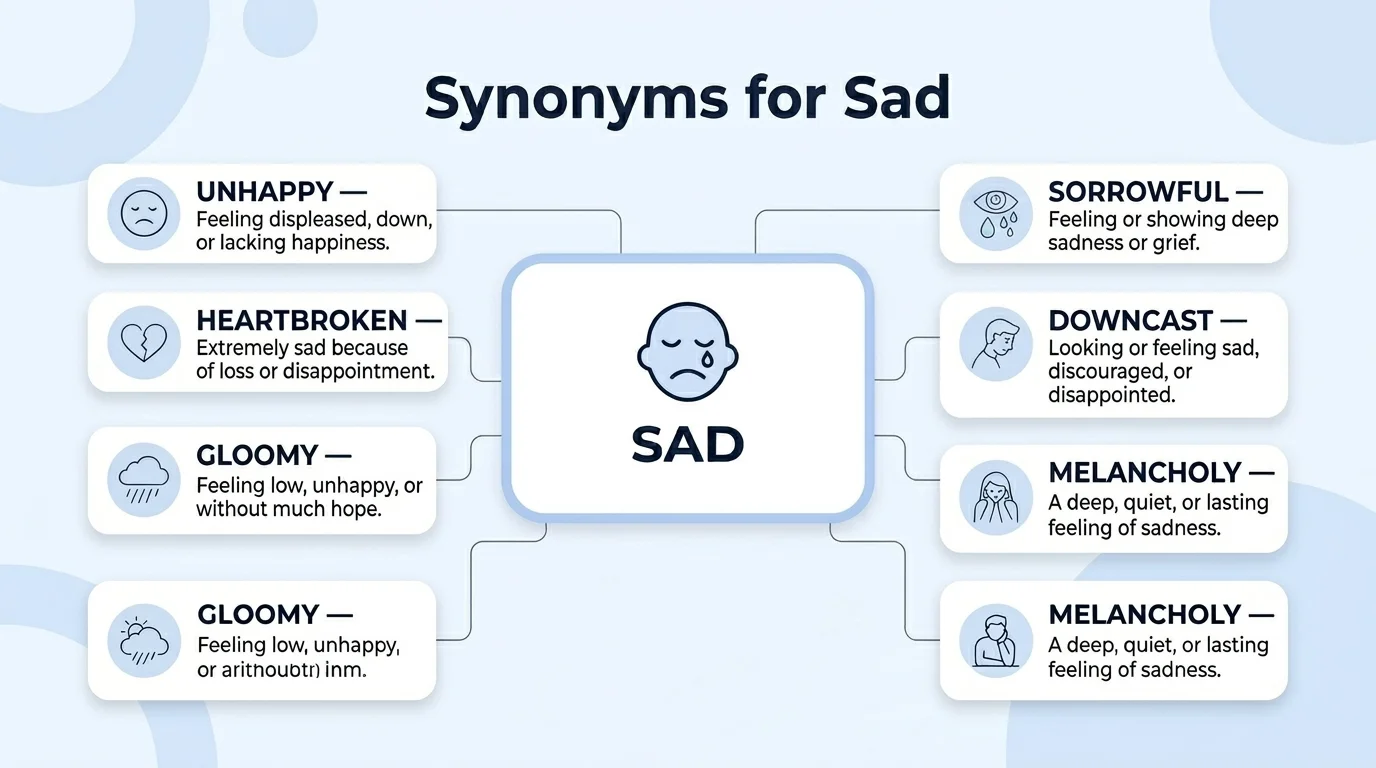
Feeling sad means feeling down, unhappy, or full of sorrow. Learning different synonyms for sad helps you describe your exact emotions with clarity. This list of synonyms for sad is useful for students, bloggers, content writers, and daily English speakers who want to express deep feelings easily. Using a varied vocabulary makes your stories powerful and engaging for everyone.
1. Unhappy
Meaning: Not feeling happy, pleased, or glad about a situation.
Examples:
- She felt unhappy when her ice cream fell on the ground.
- Mark was unhappy with his low score on the test.
2. Sorrowful
Meaning: Full of deep sadness or grief caused by loss.
Examples:
- The lost dog gave a sorrowful whine at the door.
- He shared a sorrowful story about his old hometown.
3. Gloomy
Meaning: Feeling dark, low in spirits, or without any hope.
Examples:
- Rainy afternoons always make me feel a bit gloomy.
- Sam sat in a gloomy mood all morning long.
4. Melancholy
Meaning: A quiet, long-lasting feeling of sadness without a clear cause.
Examples:
- The slow piano music created a melancholy mood in the room.
- She looked out the window with a melancholy smile.
5. Heartbroken
Meaning: Feeling crushed and extremely sad because of a big disappointment.
Examples:
- The young child was heartbroken when his toy broke.
- She felt heartbroken after saying goodbye to her best friend.
6. Downcast
Meaning: Looking downward because you feel sad, ashamed, or discouraged.
Examples:
- He walked home with downcast eyes after losing the game.
- Her downcast face showed how disappointed she was.
7. Dejected
Meaning: Feeling low in spirits and lacking hope after being rejected.
Examples:
- The player sat dejected on the bench after the loss.
- He looked dejected when his plan did not work out.
8. Despondent
Meaning: Feeling very sad, discouraged, and completely without hope.
Examples:
- She became despondent when her pet went missing.
- Do not feel despondent just because one attempt failed.
9. Disappointed
Meaning: Sad because something did not happen the way you hoped.
Examples:
- We were disappointed when the weekend trip got canceled.
- The manager felt disappointed by the poor team effort.
10. Miserable
Meaning: Feeling extremely unhappy, uncomfortable, or distressed.
Examples:
- Having a bad cold made him feel completely miserable.
- Cold rainy days make some people feel miserable inside.
11. Gloomy-faced
Meaning: Having a facial expression that looks unhappy or dark.
Examples:
- The gloomy-faced boy refused to join the birthday game.
- Why are you walking around so gloomy-faced today?
12. Tearful
Meaning: Crying or ready to cry because of pain or sorrow.
Examples:
- She gave a tearful wave as the train pulled away.
- The child had tearful eyes after bumping his knee.
13. Heavy-hearted
Meaning: Feeling weighted down by sadness, grief, or worry.
Examples:
- He made a heavy-hearted decision to sell his childhood home.
- They left the hospital with heavy-hearted steps.
14. Mournful
Meaning: Expressing deep sorrow or grief over a terrible loss.
Examples:
- The owl made a mournful sound in the night.
- She sang a mournful song at the memorial service.
15. Woeful
Meaning: Full of deep distress, bad luck, or great misery.
Examples:
- He told a woeful tale about getting lost in the woods.
- The damaged garden looked like a woeful sight.
16. Glum
Meaning: Quiet, silent, and gloomy due to feeling unhappy.
Examples:
- Tim looked glum after he lost his favorite pencil.
- Everyone sat glum in the waiting room for hours.
17. Somber
Meaning: Serious, dark, and lacking any bright or happy feelings.
Examples:
- The room fell silent with a somber atmosphere.
- He wore a somber expression during the serious meeting.
18. Crestfallen
Meaning: Sudden sadness or disappointment after feeling confident or excited.
Examples:
- She was crestfallen when her name was not called.
- The team looked crestfallen after the last-second goal.
19. Disconsolate
Meaning: So deeply sad that nothing can make you feel better.
Examples:
- The disconsolate child cried for his missing teddy bear.
- She remained disconsolate after hearing the bad news.
20. Downhearted
Meaning: Feeling sad, discouraged, or low in confidence.
Examples:
- Try not to get downhearted if progress is slow.
- The team felt downhearted after missing the final goal.
21. Forlorn
Meaning: Sad, lonely, and feeling left behind by everyone else.
Examples:
- A forlorn stray cat sat near the empty alley.
- She felt forlorn sitting by herself in the park.
22. Blue
Meaning: Feeling a little down, unhappy, or slightly depressed.
Examples:
- I always feel a bit blue on Sunday evenings.
- Listening to upbeat music helps when you feel blue.
23. Low
Meaning: Lacking energy, joy, or happiness in your daily mood.
Examples:
- My energy felt low after working a double shift.
- He spoke in a low, tired voice all afternoon.
24. Down in the Dumps
Meaning: Feeling unhappy, sad, or lacking your usual enthusiasm.
Examples:
- Why have you been down in the dumps all day?
- She felt down in the dumps after ruining her dinner.
25. Cheerfulness
Meaning: Lacking any cheer, brightness, or sense of fun.
Examples:
- The empty room felt cold and cheerless today.
- He gave a cheerless wave before walking away quietly.
26. Joyless
Meaning: Without any joy, pleasure, or happy feelings present.
Examples:
- Working without breaks made it a joyless task.
- The movie had a grey and joyless ending.
27. Broken-hearted
Meaning: Overwhelmed by deep emotional pain and sadness from grief.
Examples:
- The broken-hearted girl sat alone on the bench.
- He felt broken-hearted when his best friend moved away.
28. Uncheerful
Meaning: Not feeling bright, glad, or positive in spirit.
Examples:
- He gave an uncheerful reply to my friendly greeting.
- The rainy weather created an uncheerful morning everywhere.
29. Dour
Meaning: Stern, harsh, and refusing to smile or be happy.
Examples:
- The dour guard stood strictly at the main entrance.
- He had a dour look that scared the younger children.
30. Doleful
Meaning: Expressing sadness, grief, or a very mournful feeling.
Examples:
- The puppy gave us a doleful look through the fence.
- She sang a doleful tune while washing the dishes.
31. Lugubrious
Meaning: Looking or sounding overly sad, dark, and dramatic.
Examples:
- The actor spoke in a lugubrious voice on stage.
- He wore a lugubrious face at the birthday party.
32. Desolate
Meaning: Feeling completely empty, lonely, and ruined inside.
Examples:
- She felt desolate after everyone left the town behind.
- The abandoned house looked cold and desolate today.
33. Sullen
Meaning: Bad-tempered, silent, and glum due to resentment.
Examples:
- The boy sat sullen in his bedroom after arguing.
- She gave a sullen response when asked to clean up.
34. Melancholic
Meaning: Expressing a deep and gentle feeling of sadness.
Examples:
- The painter created a melancholic portrait of autumn leaves.
- Soft rain creates a melancholic sound on window glass.
35. Wretched
Meaning: In a very unhappy, poor, or unfortunate condition.
Examples:
- The sick traveler felt wretched all night long.
- They lived in a wretched state before finding help.
36. Lacking Joy
Meaning: Having no happiness, excitement, or pleasure present.
Examples:
- The dull movie was entirely lacking joy for viewers.
- She felt like her long daily routine was lacking joy.
37. Depressed
Meaning: Feeling persistent sadness, low energy, and no spirit.
Examples:
- The cold weather made him feel depressed inside.
- She felt depressed after her vacation came to an end.
38. Morose
Meaning: Sullen, gloomy, and unwilling to talk to other people.
Examples:
- He became morose whenever anyone mentioned his old job.
- The morose customer drank his coffee without speaking once.
39. Grievous
Meaning: Causing severe pain, sorrow, or deep distress.
Examples:
- The family suffered a grievous loss during the storm.
- Hearing the tragic news caused grievous pain for everyone.
40. Pained
Meaning: Showing emotional or physical hurt and distress clearly.
Examples:
- She gave a pained look when he mentioned the mistake.
- He spoke with a pained expression about his past.
41. Out of Spirits
Meaning: Feeling low, sad, or lacking your normal energy.
Examples:
- You seem out of spirits after that tough phone call.
- She was out of spirits and decided to sleep early.
42. Heart-sick
Meaning: Deeply distressed and sad due to love or loss.
Examples:
- He felt heart-sick being away from home so long.
- The heart-sick poet wrote about his lost memories.
43. Bleak
Meaning: Cold, unwelcoming, and offering no reason for happiness.
Examples:
- The weather forecast looked bleak for our outdoor picnic.
- He stared out at the bleak landscape in silence.
44. Down in the Mouth
Meaning: Looking visibly unhappy, sad, or discouraged about life.
Examples:
- Why are you looking so down in the mouth today?
- She was down in the mouth after failing her driving test.
45. Discontented
Meaning: Unhappy because you are not satisfied with your situation.
Examples:
- The discontented customer demanded a full cash refund.
- He felt discontented with his boring daily schedule.
46. Unhappy-hearted
Meaning: Carrying a quiet feeling of sadness inside your heart.
Examples:
- The unhappy-hearted stranger walked down the quiet road.
- She felt unhappy after her team lost the trophy.
47. Grief-stricken
Meaning: Overwhelmed by intense sorrow and painful heartbreak.
Examples:
- The grief-stricken family held each other tightly.
- She was grief-stricken when her favorite dog died.
48. Spiritless
Meaning: Lacking energy, enthusiasm, joy, or vitality completely.
Examples:
- The team gave a spiritless performance in the second half.
- He gave a spiritless wave before walking out the door.
49. Heavy
Meaning: Filled with sadness, serious thought, or emotional distress.
Examples:
- A heavy silence filled the room after the announcement.
- She walked away with a heavy heart that evening.
50. Low-spirited
Meaning: Feeling sad, discouraged, or having very low energy.
Examples:
- He felt low-spirited after working through the weekend.
- The low-spirited child sat quietly during recess time.
FAQs
1. What is the most common synonym for sad?
The word “unhappy” is the most common and widely used synonym for “sad” in everyday English.
2. Which synonym for sad works best in formal writing?
Words like “melancholy,” “despondent,” or “sorrowful” are excellent choices for formal essays and professional writing.
3. What does it mean to feel “down in the dumps”?
It is an informal idiom that means you are feeling sad, discouraged, or slightly depressed.
4. How can using synonyms for sad improve my blogging?
Using varied synonyms keeps your writing fresh, avoids repetitive phrasing, and helps capture exact emotional details for readers.
5. What is the difference between sad and heartbroken?
While “sad” covers any minor feeling of unhappiness, “heartbroken” describes an extreme emotional pain caused by deep loss or disappointment.
6. Are all synonyms for sad interchangeable?
No, some words like “gloomy” describe atmosphere or mood, while words like “grief-stricken” express intense personal sorrow.
Conclusion
Learning new synonyms for sad is a simple way to instantly boost your English communication skills. Replacing basic words with options like “melancholy,” “downcast,” or “sorrowful” makes your writing much more descriptive and engaging. Practice using these fresh vocabulary choices in your daily emails, essays, blog posts, and conversations to express your feelings with precision!

I’m Ethan Cole, a passionate vocabulary writer at LexiBoost, where I help readers understand English words in a simpler and smarter way. I enjoy exploring synonyms, antonyms, and word meanings while creating easy-to-follow content that improves everyday communication