Have you ever felt your body freeze up right before giving a big presentation? Imagine sitting in a quiet waiting room, tapping your foot while waiting for important news. That tight, uneasy feeling is what we call being tense.
The word “tense” describes a feeling of strain, nervousness, or tight pressure. It can describe a stretched rope, a nervous person, or an awkward room full of quiet people.
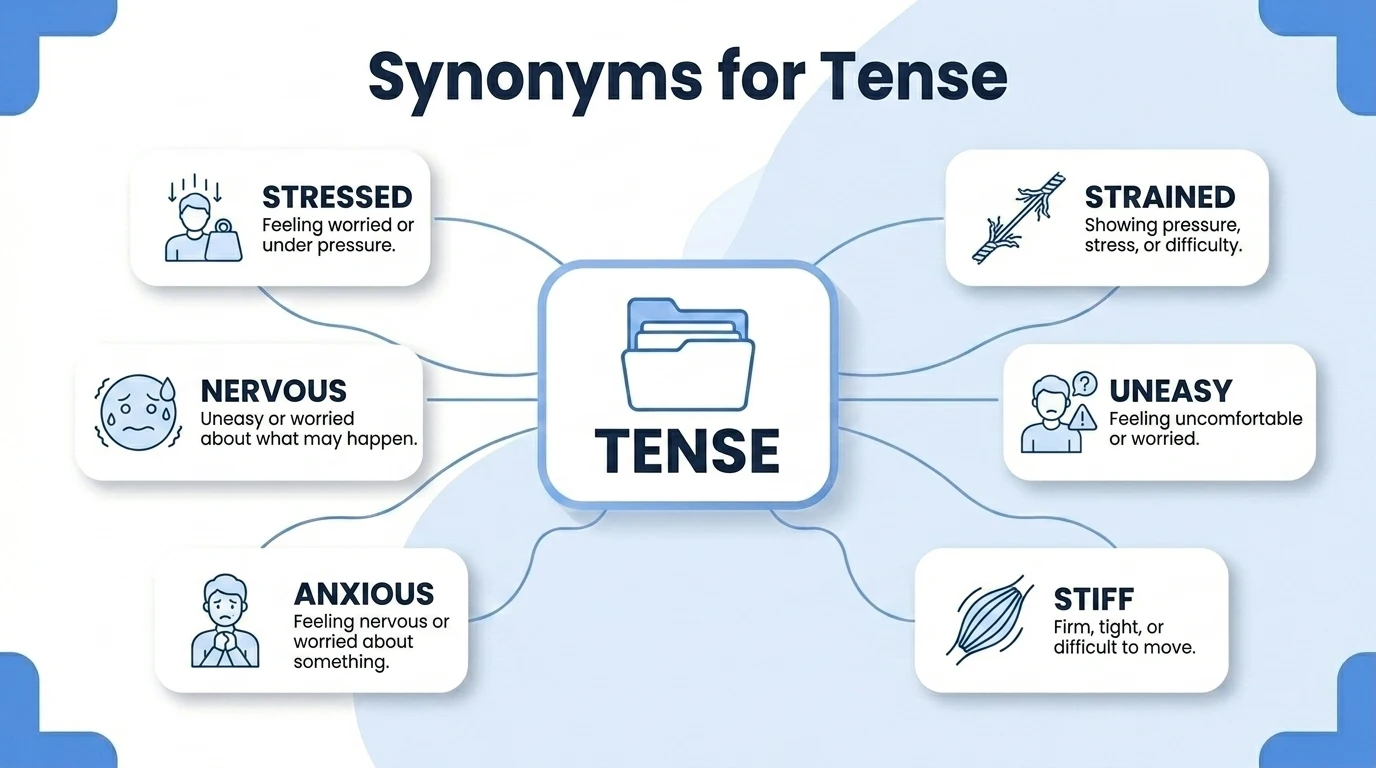
Learning different synonyms of tense is super helpful for students, bloggers, content writers, and daily English speakers. It keeps your writing interesting and stops you from repeating the same word. Using varied synonyms of tense makes your stories exciting and clear. Let’s explore 50 great synonyms of tense to boost your vocabulary today!
Strain
Meaning:
Strain means a state of great stress, pressure, or bodily tension.
Examples:
- The heavy workload put a lot of strain on his mental health.
- Long hours of studying caused strain on her eyes.
Stress
Meaning:
Stress is a feeling of emotional or physical tension caused by difficult events.
Examples:
- Exercise is a great way to relieve daily stress.
- He felt a lot of stress before taking his final exam.
Anxiety
Meaning:
Anxiety is a strong feeling of worry, nervousness, or fear about something uncertain.
Examples:
- She took a deep breath to calm her anxiety before speaking.
- Walking into the new classroom filled him with anxiety.
Nervousness
Meaning:
Nervousness is the state of feeling easily agitated, worried, or fearful.
Examples:
- His shaky hands showed his hidden nervousness on stage.
- A quick laugh helped break the inner nervousness in the room.
Pressure
Meaning:
Pressure is the feeling of urgent demands or heavy expectations placed on you.
Examples:
- Athletes often perform under high pressure during championship games.
- Peer pressure can make teenagers do strange things.
Tightness
Meaning:
“Tightness” means a physical state of being stretched firm or constricted.
Examples:
- He felt a sudden tightness in his chest after running fast.
- Stretching every morning helps remove muscle tightness.
Rigidity
Meaning:
Rigidity is the quality of being stiff, inflexible, or unable to bend.
Examples:
- The rigidity of the wooden board kept it from breaking easily.
- His mental rigidity made it hard for him to accept new ideas.
Stiffness
Meaning:
Stiffness is an inability to move easily or bend without pain.
Examples:
- Sitting at a desk all day causes stiffness in your lower back.
- Cold weather often increases joint stiffness in older adults.
Agitation
Meaning:
Agitation is a state of restless excitement, worry, or physical disturbance.
Examples:
- She paced across the hallway in visible agitation.
- The loud construction noise added to his growing agitation.
Apprehension
Meaning:
Apprehension is a fearful feeling that something bad or harmful will happen.
Examples:
- They waited for the storm with deep apprehension.
- Her apprehension faded once she met her friendly new boss.
Unease
Meaning:
Unease is a vague feeling of discomfort, worry, or lack of peace.
Examples:
- A strange silence in the dark house created a sense of unease.
- He noticed a feeling of unease among the crowd.
Discomfort
Meaning:
Discomfort means a feeling of minor pain, awkwardness, or physical distress.
Examples:
- The hard wooden chair caused her great discomfort.
- He spoke openly about his discomfort with the new company rules.
Restlessness
Meaning:
Restlessness is the inability to stay still or relax due to worry or energy.
Examples:
- Her restlessness kept her awake for most of the night.
- The long delay at the airport caused growing restlessness among passengers.
Jitteriness
Meaning:
Jitteriness means feeling shaky, nervous, or jumpy due to fear or caffeine.
Examples:
- Drinking too many cups of coffee caused his sudden jitteriness.
- She tried to hide her jitteriness before the job interview.
Edginess
Meaning:
Edginess is a state of being sharp, irritable, or easily annoyed.
Examples:
- His edginess made everyone tread carefully around him.
- Lack of sleep usually leads to mood swings and edginess.
Irritability
Meaning:
Irritability means becoming easily frustrated, angry, or annoyed by small things.
Examples:
- Hunger can cause sudden irritability in young children.
- Hot summer days often increase general irritability.
Friction
Meaning:
Friction is disagreement, conflict, or tension between people with different views.
Examples:
- Differing opinions caused friction between the two business partners.
- Good communication helps reduce friction in any relationship.
Conflict
Meaning:
Conflict is a strong disagreement, argument, or fight between opposing sides.
Examples:
- The two coworkers resolved their conflict with a friendly chat.
- Unresolved conflict can ruin team productivity very quickly.
Hostility
Meaning:
Hostility is an unfriendly, aggressive, or antagonistic attitude toward others.
Examples:
- The rival teams showed open hostility during the match.
- She was surprised by the sudden hostility in his voice.
Antagonism
Meaning:
Antagonism is active opposition, dislike, or hatred toward someone else.
Examples:
- The political debate was full of personal antagonism.
- Try to avoid unnecessary antagonism when discussing sensitive topics.
Suspense
Meaning:
Suspense is a feeling of excited or anxious uncertainty about what will happen next.
Examples:
- The scary movie kept the audience in total suspense until the end.
- Waiting for the test results built intense suspense.
Dread
Meaning:
Dread is great fear or terror regarding a future event.
Examples:
- He woke up with a feeling of dread on Monday morning.
- The thought of visiting the dentist filled her with dread.
Panic
Meaning:
Panic is a sudden, uncontrollable fear that causes chaotic behavior.
Examples:
- Try to stay calm and avoid panic during an emergency drill.
- The sudden loud noise caused widespread panic in the market.
Alarm
Meaning:
Alarm is a sudden feeling of fear or shock caused by awareness of danger.
Examples:
- The news caused great alarm among local residents.
- She looked up in alarm when the dog started barking loudly.
Concern
Meaning:
Concern is a feeling of worry, interest, or care about a situation.
Examples:
- Parents showed deep concern about the safety of the school playground.
- Thank you for expressing your genuine concern for my health.
Perturbation
Meaning:
Perturbation means mental uneasiness, disturbance, or emotional trouble.
Examples:
- His unusual perturbation was obvious to all his close friends.
- She tried to hide her inner perturbation with a fake smile.
Distress
Meaning:
Distress is extreme anxiety, sorrow, pain, or suffering.
Examples:
- The family was in deep distress after losing their home.
- Sending a clear signal helps ships located in distress.
Nervousness
Meaning:
Nervousness is a feeling of apprehension or lack of confidence.
Examples:
- A few deep breaths helped ease her stage nervousness.
- Public speaking can trigger intense nervousness in many people.
Trepidation
Meaning:
Trepidation is a feeling of fear or agitation about something that may happen.
Examples:
- He entered the dark cave with cautious trepidation.
- She approached the high diving board with noticeable trepidation.
Constriction
Meaning:
Constriction is a feeling of tightness or narrowing in a physical body part.
Examples:
- Tight clothing can cause uncomfortable chest constriction.
- The cold air caused a sudden constriction in his airways.
Tautness
Meaning:
Tautness means the physical state of being stretched very tight without slack.
Examples:
- The rope pulled with extreme tautness during the tug-of-war game.
- You could see the tautness in his facial muscles as he focused.
Inflexibility
Meaning:
Inflexibility means an inability to bend, change, or adapt to new situations.
Examples:
- His inflexibility made project negotiations very difficult for everyone.
- Muscle inflexibility can lead to painful workout injuries.
Unyieldingness
Meaning:
Unyieldingness is the quality of remaining firm, hard, or unwilling to give way.
Examples:
- The unyieldingness of the solid stone wall stopped the car completely.
- Her unyieldingness on values earned her respect from peers.
Firmness
Meaning:
Firmness means being solid, compact, or unwavering in purpose.
Examples:
- The bed mattress provided the right amount of firmness for sleeping.
- She spoke with polite firmness when declining the wrong offer.
Rigidness
Meaning:
Rigidness is a stiff or unbending state of mind or material structure.
Examples:
- Steel pipes are chosen for construction because of their rigidness.
- The rigidness of the old rules frustrated the young employees.
Unbendingness
Meaning:
Unbendingness is a refusal to yield, compromise, or bend physically.
Examples:
- The unbendingness of the metal bar made it tough to shape.
- His unbendingness during arguments alienated his close friends.
Hardness
Meaning:
Hardness is the quality of being firm, solid, or difficult to bend or break.
Examples:
- Diamond is famous around the world for its natural hardness.
- The extreme hardness of the frozen ground delayed digging work.
Stiffening
Meaning:
Stiffening is the action or process of becoming firm, tight, or rigid.
Examples:
- Cool air caused a quick stiffening in his sore leg muscles.
- The sudden stiffening of her posture showed she was alerted.
Strainings
Meaning:
Strainings are repeated physical or mental efforts under severe pressure.
Examples:
- Heavy strainings at the gym left his shoulders sore the next day.
- Mental strainings over money problems kept him up at night.
Overextension
Meaning:
Overextension means expanding or stretching something beyond safe or natural limits.
Examples:
- Financial overextension led the small company into bankruptcy.
- Muscle overextension during sports often causes painful tears.
Tension
Meaning:
Tension is a state of physical tightness, mental strain, or hostile relations.
Examples:
- You could feel the heavy tension in the room after the argument.
- Yoga helps release physical tension built up in your back.
Closeness
Meaning:
Closeness in context means a stifling, tight, or uncomfortable lack of air or space.
Examples:
- The closeness of the tiny room made it hard to breathe easily.
- Packed crowds created an uncomfortable closeness inside the bus.
Clench
Meaning:
Clench is a tight contraction or gripping motion of muscles or jaws.
Examples:
- A sudden clench of his jaw showed his silent anger.
- He held the rope with a firm clench to avoid falling.
Twitchiness
Meaning:
Twitchiness is an anxious state marked by small, sudden, nervous movements.
Examples:
- His twitchiness increased as the countdown timer reached zero.
- High caffeine intake often causes muscle twitchiness in your eyelid.
Jumpiness
Meaning:
Jumpiness is a nervous state where someone startles easily at small sounds.
Examples:
- Watching scary movies late at night causes extreme jumpiness.
- Her jumpiness made her leap when the phone rang unexpectedly.
Shaking
Meaning:
Shaking is an involuntary trembling movement caused by fear, cold, or nerves.
Examples:
- His hands stopped shaking after taking a drink of water.
- Cold winter winds left the outdoor workers shaking uncontrollably.
Trembling
Meaning:
Trembling is a rapid, shaking movement caused by stress, excitement, or weakness.
Examples:
- She spoke with a trembling voice during the emotional speech.
- A soft trembling in his hands revealed his deep anxiety.
Flutter
Meaning:
Flutter is a rapid, nervous vibration or rapid beating sensation inside.
Examples:
- She felt a nervous flutter in her stomach before entering the stage.
- Heart flutter can happen when you drink energy drinks quickly.
Uneasiness
Meaning:
Uneasiness is a state of feeling anxious, unsettled, or lacking peace of mind.
Examples:
- Dark clouds gathering overhead brought a sense of uneasiness.
- He could not shake off his growing uneasiness about the trip.
FAQs
1. What are the best synonyms of tense for daily writing?
Words like “nervous,” “stressed,” “tight,” and “anxious” are simple, common synonyms of tense.
2. Can synonyms of tense describe both mind and body?
Yes, words like “stiffness” describe the physical body, while “anxiety” describes your mental state.
3. How do synonyms of tense improve my vocabulary?
Using varied words prevents boring repetition and helps you describe feelings or scenes more accurately.
4. What is the difference between “tense” and “stiff”?
“Tense” often implies emotional stress or tightness, whereas “stiff” usually describes physical rigidity or lack of movement.
5. Are synonyms of tense useful for storytellers?
Absolutely, choosing precise synonyms of tense helps authors build suspense, drama, and relatable characters.
6. Which synonym of tense works best for describing arguments?
Words like “friction,” “conflict,” or “hostility” work best to describe tense interpersonal situations.
Conclusion
Mastering various synonyms of tense empowers you to express feelings, scenes, and physical states with precise impact. Learning these words improves your writing, blogging, speaking, and overall everyday communication. Try using these dynamic words in your emails, essays, and daily conversations to build stronger vocabulary habits.

I’m Elaris Vane, a vocabulary enthusiast and English language writer at LexiBoost, where I help readers discover smarter and more natural ways to use English words. I enjoy simplifying complex vocabulary, explaining synonyms and antonyms, and breaking down confusing word differences into easy explanations.