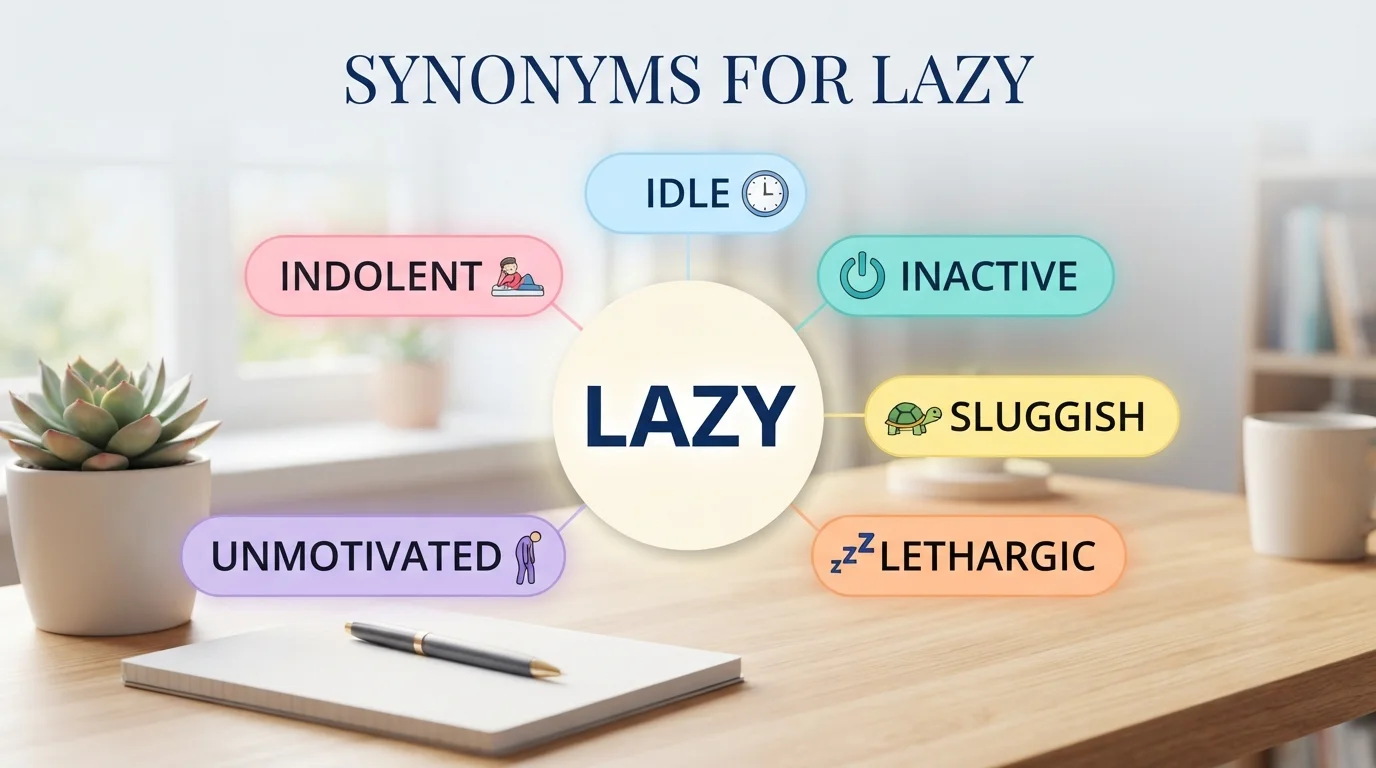
Have you ever spent a whole Sunday on the couch and ignored your tasks? We all have days when we do not want to work. When you write about this feeling, using the word “lazy” over and over gets boring. For example, calling a tired worker a lazy person three times in one essay sounds repetitive. The word “lazy” simply means not wanting to work or use energy. Learning new synonyms for “lazy” is very helpful for students, bloggers, content writers, and daily English speakers. It makes your writing clear, fresh, and fun to read!
1. Idle
Meaning: Not doing any work or action.
Examples:
- The machines sat idle all afternoon.
- He spent an idle day at the beach.
2. Slothful
Meaning: Extremely lazy and slow-moving.
Examples:
- The slothful puppy slept under the table.
- He felt slothful after eating a big lunch.
3. Indolent
Meaning: Wanting to avoid activity or effort.
Examples:
- The indolent cat lay in the warm sun.
- Warm summer days make us feel indolent.
4. Inactive
Meaning: Not engaging in physical action.
Examples:
- Bears remain inactive during the cold winter.
- He leads an inactive life at home.
5. Sluggish
Meaning: Moving slow and lacking energy.
Examples:
- I feel sluggish when I skip breakfast.
- Traffic was sluggish during the heavy rain.
6. Lethargic
Meaning: Feeling sleepy, weak, and lacking care.
Examples:
- The sick child was unusually lethargic.
- Hot weather makes many people lethargic.
7. Shiftless
Meaning: Lacking ambition and hard work.
Examples:
- The shiftless youth refused to look for work.
- He spent his life in a shiftless manner.
8. Work-shy
Meaning: Trying hard to avoid job duties.
Examples:
- The work-shy clerk hid from his boss.
- Nobody likes to work with a work-shy partner.
9. Slack
Meaning: Not active, busy, or tight.
Examples:
- Business is always slack in January.
- He was slack in doing his homework.
10. Unambitious
Meaning: Not seeking success or progress.
Examples:
- He was content with his unambitious life.
- An unambitious worker rarely gets a promotion.
11. Passive
Meaning: Letting things happen without doing anything.
Examples:
- She took a passive role in the group project.
- He remained passive during the debate.
12. Somnolent
Meaning: Sleepy or causing sleepiness.
Examples:
- The warm room made everyone somnolent.
- The town was quiet and somnolent at noon.
13. Languid
Meaning: Moving with very slow and weak energy.
Examples:
- She gave a languid wave from her bed.
- He walked with a languid step today.
14. Torpid
Meaning: Mentally or physically slow and inactive.
Examples:
- Snakes become torpid in low temperatures.
- A heavy meal left him torpid on the sofa.
15. Drowsy
Meaning: Half asleep and ready to nap.
Examples:
- The quiet movie made me feel drowsy.
- She wiped her drowsy eyes and yawned.
16. Inert
Meaning: Unable to move or act.
Examples:
- He lay inert on the bed after the run.
- The rock stayed inert on the ground.
17. Slow-moving
Meaning: Taking a long time to travel or act.
Examples:
- A slow-moving turtle crossed the dusty dirt road.
- The line at the store was slow-moving today.
18. Lifeless
Meaning: Lacking energy, spirit, or vigor.
Examples:
- The party felt lifeless without any music playing.
- He gave a lifeless performance on stage.
19. Sedentary
Meaning: Spending a lot of time seated.
Examples:
- Desk jobs often lead to a sedentary lifestyle.
- He enjoys sedentary hobbies like reading books.
20. Heavy-footed
Meaning: Moving in a slow and clumsy way.
Examples:
- The heavy-footed runner finished last in the race.
- He walked upstairs in a heavy-footed manner.
21. Plodding
Meaning: Working or moving slowly and heavily.
Examples:
- He kept a plodding pace up the hill.
- The plodding story bored the audience.
22. Leaden
Meaning: Dull, slow, and heavy to move.
Examples:
- My leathery legs refused to run faster.
- He walked with leaden steps toward school.
23. Apathetic
Meaning: Showing no interest or enthusiasm.
Examples:
- Voters seemed apathetic about the local election.
- He gave an apathetic shrug to the question.
24. Unmotivated
Meaning: Lacking a desire to achieve goals.
Examples:
- The unmotivated student failed his test.
- She felt unmotivated to clean her room today.
25. Unenergetic
Meaning: Lacking physical power and drive.
Examples:
- He felt unenergetic after a long day.
- The puppy seemed unenergetic and tired.
26. Lackadaisical
Meaning: Lacking enthusiasm and determination.
Examples:
- He showed a lackadaisical approach to his work.
- She gave a lackadaisical effort during practice.
27. Careless
Meaning: Not taking proper care or effort.
Examples:
- Careless spelling mistakes lower your test marks.
- He left the front door open by being careless.
28. Negligent
Meaning: Failing to take proper care of duty.
Examples:
- The negligent owner forgot to feed the dog.
- He was negligent in filing his taxes on time.
29. Remiss
Meaning: Lacking care in doing duties.
Examples:
- It was remiss of him to forget the meeting.
- She felt remiss for not calling her mother back.
30. Lax
Meaning: Not strict or careful about rules.
Examples:
- Security was lax at the venue entrance.
- He was lax about finishing his chores.
31. Slower-than-molasses
Meaning: Extremely slow in movement or action.
Examples:
- The old computer was slower than molasses today.
- Service at the diner was slower-than-molasses.
32. Slow-going
Meaning: Progressing at a very slow speed.
Examples:
- Writing the book was slow-going work.
- The road construction made travel slow-going.
33. Easygoing
Meaning: Relaxed and happy to do nothing.
Examples:
- Our teacher is easygoing about small delays.
- He has an easygoing attitude toward life.
34. Laid-back
Meaning: Very relaxed and not stressed.
Examples:
- She has a laid-back approach to style.
- They enjoyed a laid-back afternoon together.
35. Unhurried
Meaning: Moving without any rush or stress.
Examples:
- They enjoyed an unhurried walk in the park.
- He ate his lunch at an unhurried pace.
36. Leisurely
Meaning: Done without hurry and in comfort.
Examples:
- We took a leisurely stroll around town.
- She read the newspaper at a leisurely speed.
37. Unbusy
Meaning: Not occupied with work or tasks.
Examples:
- He enjoyed an unbusy Sunday morning.
- The shop remained unbusy all afternoon.
38. Off-duty
Meaning: Not engaged in official work.
Examples:
- The off-duty officer rested at home.
- She likes to read during off-duty hours.
39. Restful
Meaning: Giving or causing quiet and rest.
Examples:
- We had a restful weekend at the cabin.
- Soft music creates a restful mood.
40. Supine
Meaning: Lying face upward in complete rest.
Examples:
- He lay supine on the grass watching clouds.
- The dog slept supine on the warm floor.
41. Procrastinating
Meaning: Delaying tasks that need to be done.
Examples:
- He spent hours procrastinating on his phone.
- Stop procrastinating and start your homework.
42. Dilatory
Meaning: Slow to act or cause delay.
Examples:
- The worker was dilatory in answering emails.
- His dilatory habits caused project delays.
43. Tardy
Meaning: Delaying action or arriving late.
Examples:
- He was tardy in turning in his assignment.
- She gave a tardy reply to my text message.
44. Lagging
Meaning: Falling behind in speed or progress.
Examples:
- Sales were lagging behind last month’s goal.
- The lagging runner tried hard to catch up.
45. Loitering
Meaning: Standing around without a clear purpose.
Examples:
- Teens were loitering outside the store.
- He was loitering near the park entrance.
46. Dawdling
Meaning: Wasting time by moving very slowly.
Examples:
- Stop dawdling or we will miss the bus.
- She spent the morning dawdling over coffee.
47. Dallying
Meaning: Acting slowly or wasting precious time.
Examples:
- He was dallying on his way home from school.
- Do not spend time dallying when work is waiting.
48. Fleeting
Meaning: Moving carelessly from task to task.
Examples:
- He showed a fleeting interest in his studies.
- Her attention to chores was fleeting today.
49. Casual
Meaning: Not showing deep thought or effort.
Examples:
- He gave a casual glance at his homework assignments.
- She took a casual approach to the game.
50. Soft
Meaning: Wanting comfort rather than hard effort.
Examples:
- Living in luxury made him soft and idle.
- He chose the soft option instead of working hard.
Frequently Asked Questions
1. What is the most common synonym for lazy?
The most common synonym for “lazy” is “idle,” which means not doing any work.
2. What is a formal word for lazy?
A great formal word for “lazy” is “indolent” or “slothful.”
3. Can “lazy” have a positive meaning?
Yes, words like “relaxed” or “laid-back” describe a positive, calm kind of lazy.
4. How does learning synonyms help my English writing?
Learning synonyms prevents word repetition and makes your writing engaging to read.
5. What is the difference between lazy and lethargic?
“Lazy” means avoiding work, while “lethargic” means lacking physical energy due to tiredness or illness.
6. Are all synonyms for “lazy” interchangeable?
No, some words fit formal essays, like “indolent,” while others, like “laid-back,” fit casual chats.
Conclusion
Learning synonyms for “lazy” helps you speak and write much better. Expanding your word list improves your essays, blog posts, emails, and daily English conversations. Try using a few new words from this list in your next conversation or writing task!

I’m Sophia Carter, and I love researching English words and turning them into simple, useful vocabulary guides for learners. I enjoy exploring synonyms, alternative word choices, and sentence improvement tips that help people write more naturally and professionally.