Have you ever felt stuck using the same word over and over? Picture this: you’re writing an important essay about community involvement. You keep typing “citizenship” again and again. It feels repetitive, and your writing loses its spark. We’ve all been there.
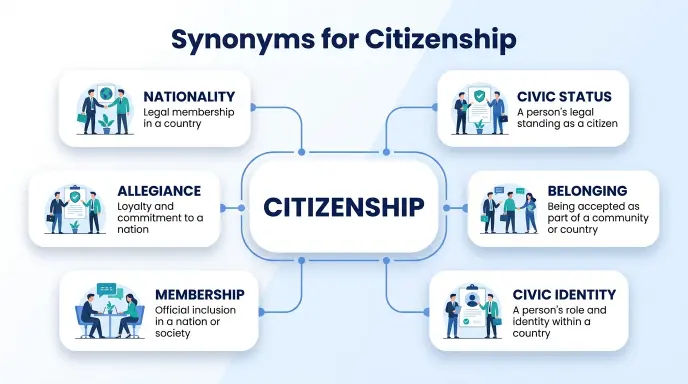
Now, imagine having 50 fresh ways to say “citizenship.” That’s exactly what you’ll find here. In simple terms, synonyms for “citizenship” are other words that mean the same thing: being part of a country or community.
These words help you talk about membership, rights, and belonging in new ways.
This guide is perfect for students working on essays, bloggers creating content, and anyone who wants to sound more natural in English. Learning synonyms for citizenship will make your writing richer and more interesting.
You’ll never struggle to find the right word again. Let’s dive in and explore all the amazing options you have!
50 Powerful Synonyms for Citizenship
| Synonym | Meaning |
| Nationality | Legal membership in a specific country |
| Membership | Being part of a group or community |
| Civil status | Your official position as a member of a state |
| Domicile | The country you call your permanent home |
| Residence | Living in a particular place legally |
| Heritage | The history and culture you inherit from your ancestors |
| Rights | What you’re entitled to as a member of a society |
| Privileges | Special benefits that come with belonging |
| Naturalization | The process of becoming a citizen |
| Allegiance | Loyalty to your country |
| Origin | Where you come from |
| Status | Your official position in a society |
| Franchise | The right to vote and participate |
| Civic rights | Legal rights granted to members |
| National identity | Who you are based on your country |
| Public membership | Being part of the broader community |
| Legal belonging | Having official ties to a nation |
| Statehood | Having status as a citizen of a state |
| Association | Being connected to a group |
| Affiliation | Formal connection to a country |
| Community ties | Bonds to people in your area |
| Participation | Taking part in society |
| Involvement | Being active in your community |
| Patriotism | Love and devotion to your country |
| Duty | What you should do for your country |
| Responsibility | What you’re accountable for as a member |
| Rights holder | Someone who has legal rights |
| National | A person with citizen rights |
| Subject | A person under a government |
| Denizen | Someone who lives in a place regularly |
| Inhabitant | A person living in a particular area |
| Dweller | Someone who resides somewhere |
| Native | Person born in a specific country |
| Resident | Person living in a place legally |
| Citizenry | All citizens as a group |
| Population | All the people in a country |
| Body politic | The collective group of citizens |
| Constituency | Citizens in a voting area |
| Electorate | People with voting rights |
| Taxpayer | Someone who pays taxes to the state |
| Ratepayer | Person paying local taxes |
| Community member | A person belonging to a group |
| Society member | A person in a social group |
| Countryman | A person from the same country |
| Compatriot | Fellow citizen |
| Nationalist | Someone who supports their nation |
| Commoner | Regular citizen without special titles |
| Freeman | Free citizen with rights |
| Burgess | Historical term for citizen with rights |
| Citizen | Standard term for a legal member |
50 Deep-Dive Synonyms and Examples
Nationality
Meaning:
Nationality means your legal connection to a specific country. It tells people which country you belong to officially.
Examples:
- “My nationality is Canadian, so I can live and work there.”
- “She applied for British nationality after living in London for ten years.”
MemA membership
Meaning:
Membership means being part of a group or community. It’s about belonging and having access to what that group offers.
Examples:
- “His membership in the local club gave him access to many resources.”
- “We value your membership in our neighborhood association.”
Civil status
Meaning:
Civil status refers to your legal standing within a nation. It describes your position regarding rights and responsibilities.
Examples:
- “Her civil status changed when she received her citizenship papers.”
- “The lawyer explained how civil status affects your rights.”
Domicile
Meaning:
Domicile is the country you consider your permanent home. It’s where you plan to return after traveling.
Examples:
- “Despite living abroad, his domicile remained in France.”
- “You need to prove your domicile for the application.”
Residence
Meaning:
Residence means living in a specific place legally. It shows where you actually stay and have your home.
Examples:
- “Her residence in Australia gave her certain benefits.”
- “After years of residence, she applied for permanent status.”
Heritage
Meaning:
Heritage is the cultural background you inherit. It includes traditions, language, and history from your ancestors.
Examples:
- “His Italian heritage influenced his citizenship journey.”
- “She celebrates her African heritage with pride.”
Rights
Meaning:
Rights are things you can legally do as a member of a society. They protect you and give you freedom.
Examples:
- “Citizenship gives you rights like voting and working.”
- “Everyone deserves to know their basic rights.”
Privileges
Meaning:
Privileges are special benefits or advantages. They come from being a member of a group or country.
Examples:
- “Being a citizen comes with certain privileges like free healthcare.”
- “He enjoys the privileges of being a resident in that country.”
Naturalization
Meaning:
Naturalization is the official process of becoming a citizen. It’s how immigrants gain full membership.
Examples:
- “After five years, she started the naturalization process.”
- “Naturalization requires passing a citizenship test.”
Allegiance
Meaning:
Allegiance means loyalty and faithfulness to your country. It’s promising to support and protect your nation.
Examples:
- “He pledged his allegiance to the United States.”
- “Citizens show allegiance by following the laws.”
Origin
Meaning:
Origin refers to where you came from. It’s the country or place you were born in or have roots in.
Examples:
- “His origin is Mexico, though he now lives in Canada.”
- “The government asked about her country of origin.”
Status
Meaning:
Status describes your official position. It tells others what rights and duties you have.
Examples:
- “Her status changed after she became a citizen.”
- “Check your status before you travel internationally.”
Franchise
Meaning:
“Franchise” means the right to vote. It’s how citizens participate in choosing their leaders.
Examples:
- “The franchise is a basic right for all citizens.”
- “She exercised her franchise at the polling station.”
Civic rights
Meaning:
Civic rights are the legal freedoms you enjoy. They include voting, speaking freely, and participating.
Examples:
- “Civic rights protect you from unfair treatment.”
- “Everyone should understand their civic rights.”
National identity
Meaning:
National identity is how you see yourself. It relates to being connected to a country and its culture.
Examples:
- “Her national identity is both French and German.”
- “Having a national identity gives you a sense of belonging.”
Public membership
Meaning:
Public membership means being part of the wider community. It connects you to society as a whole.
Examples:
- “Public membership comes with social responsibilities.”
- “They encouraged public membership in local events.”
Legal belonging
Meaning:
Legal belonging means having recognized ties to a nation. It means the law sees you as a member.
Examples:
- “Her legal belonging was confirmed by the government.”
- “Legal belonging gives you protection under the law.”
Statehood
Meaning:
Statehood means having citizen status in a sovereign nation. It means you belong to an independent country.
Examples:
- “His statehood was recognized after the documents were processed.”
- “Statehood gives you full participation rights.”
Association
Meaning:
Association means being connected to a group. It describes your link to a community or nation.
Examples:
- “Her association with the country started when she moved there.”
- “His association with the local community grew stronger.”
Affiliation
Meaning:
Affiliation means your official connection to something. It can mean being connected to a country or group.
Examples:
- “She declared her affiliation with Canada.”
- “His political affiliation influenced his citizenship views.”
Community ties
Meaning:
Community ties are the bonds you have with others. They connect you to your neighborhood and country.
Examples:
- “His community ties made him feel at home.”
- “Strong community ties make a country better.”
Participation
Meaning:
Participation means getting involved. It means taking part in activities and community life.
Examples:
- “Citizenship means active participation in society.”
- “Her participation helped improve the school.”
Involvement
Meaning:
Involvement means being engaged in things. It’s about caring and taking action in your community.
Examples:
- “His involvement in the neighborhood was inspiring.”
- “Citizenship requires involvement in local matters.”
Patriotism
Meaning:
Patriotism is love for your country. It’s supporting your nation and feeling proud of it.
Examples:
- “Her patriotism was clear in her volunteer work.”
- “Patriotism unites people during hard times.”
Duty
Meaning:
Duty is what you should do for others. It’s the responsibility that comes with being a citizen.
Examples:
- “Voting is a duty for every citizen.”
- “He takes his duty to serve seriously.”
Responsibility
Meaning:
Responsibility means being accountable. It means you must care for others and follow the rules.
Examples:
- “Citizenship brings responsibility to your community.”
- “Teaching responsibility helps future generations.”
Rights holder
Meaning:
A rights holder is a person with legal protections. It means you have certain freedoms under the law.
Examples:
- “As a rights holder, you can demand fair treatment.”
- “Every rights holder should know their freedoms.”
National
Meaning:
A national is a person with citizen rights. It means you legally belong to a specific country.
Examples:
- “All nationals are required to pay taxes.”
- “He is a national of the United Kingdom.”
Subject
Meaning:
The subject describes being under a government’s rule. Historically, it meant a person had “denizen” status.
Examples:
- “The British subject enjoyed certain privileges.”
- “Every subject of the crown has duties.”
Denizen
Meaning:
“Denizen” means someone living in a place. It describes regular residents of a community.
Examples:
- “The denizens of that town enjoy their local events.”
- “He became a denizen of the city after years there.”
Inhabitant
Meaning:
“Inhabitant” means someone who lives in a place. It’s about physically residing in an area.
Examples:
- “All inhabitants of the island were citizens.”
- “The inhabitants raised their concerns at the meeting.”
Dweller
Meaning:
Dweller describes a person living somewhere. It’s a simple way to say someone resides there.
Examples:
- “City dwellers have different needs than rural residents.”
- “As a dweller of that area, she knew the community.”
Native
Meaning:
“Native” means born in a particular country. It describes people from the place they live.
Examples:
- “She is a native of Australia.”
- “Native citizens have certain cultural knowledge.”
Resident
Meaning:
“Resident” means someone living in a place legally. It means you have permission to stay there.
Examples:
- “All residents must register with the government.”
- “He has been a resident for over twenty years.”
Citizenry
Meaning:
“Citizenry” means all citizens as a group. It describes the whole body of people in a nation.
Examples:
- “The citizenry voted in the elections.”
- “A strong citizenry builds a strong nation.”
Population
Meaning:
Population refers to all people in a country. It includes citizens and non-citizens alike.
Examples:
- “The entire population celebrated the holiday.”
- “The population supported the new law.”
Body politic
Meaning:
The body politic is the collection of citizens. It describes the people who make up a country.
Examples:
- “The body politic demanded better roads.”
- “A healthy body politic means a happy nation.”
Constituency
Meaning:
“Constituency” means citizens in a voting area. These are voters who choose their representatives.
Examples:
- “She spoke to her entire constituency.”
- “The constituency voted for their local leader.”
Electorate
Meaning:
“Electorate” means people with voting rights. It describes citizens who can participate in elections.
Examples:
- “The electorate chose the new president.”
- “A well-informed electorate makes better choices.”
Taxpayer
Meaning:
A taxpayer means someone who pays taxes. It’s a way to identify people who support the government.
Examples:
- “Every taxpayer helps fund public services.”
- “The taxpayer deserves transparency in spending.”
Ratepayer
Meaning:
“Ratepayer” means someone paying local taxes. They contribute to the upkeep of their community.
Examples:
- “Ratepayers supported the new community project.”
- “Every ratepayer should have a say in local matters.”
Community member
Meaning:
A community member describes a person in a group. It emphasizes belonging to a local area.
Examples:
- “She is an active community member.”
- “Community members helped clean the park.”
Society member
A society:
A society member is a person in a social group. It describes being part of a larger organization.
Examples:
- “He became a society member after his citizenship.”
- “Society members contribute to the general good.”
Countryman
Meaning:
“Countryman” means someone from the same country. It’s a word for people who share your nationality.
Examples:
- “He greeted his fellow countryman warmly.”
- “My countryman helped me adjust to the new culture.”
Compatriot
Meaning:
“Compatriot” describes a fellow citizen. It’s used for people who belong to the same country.
Examples:
- “She found support among her compatriots.”
- “My compatriots welcomed me home.”
Nationalist
Meaning:
Nationalists support their nation strongly. They believe in the importance of their country.
Examples:
- “He is known as a strong nationalist.”
- “Nationalists work to improve their countries.”
Commoner
“Commoner” means a regular citizen. It distinguishes ordinary people from nobles or royalty.
Examples:
- “The king supported the commoners.”
- “A commoner can rise to great positions.”
Freeman
Meaning:
“Freeman” means a free citizen with rights. Historically, it meant someone who wasn’t enslaved.
Examples:
- “The freeman enjoyed all legal protections.”
- “Every freeman has a voice in society.”
Burgess
Meaning:
“Burgess” is an old term for a citizen. It was used in towns with specific voting privileges.
Examples:
- “The burgesses of the town voted for the mayor.”
- “He earned the title of burgess.”
Citizen
Meaning:
“Citizen” means a legal member of a country. It’s the standard word for someone with full rights.
Examples:
- “She became a citizen after passing the test.”
- “Every citizen has the right to vote.”
Conclusion
Learning synonyms for citizenship changes how you write and speak. You now have 50 new words to express the same idea in fresh ways. These words help you write better essays, create more engaging content, and communicate clearly.
If you’re sending an email, writing a blog, or having a conversation, using these synonyms for citizenship will make you sound like a confident English speaker.

My name is Emily Johnson, and I am an English content writer with a strong passion for language and communication. I enjoy exploring the beauty of words and turning complex vocabulary into simple, easy-to-understand explanations. My work mainly focuses on synonyms, antonyms, word meanings, and practical writing tips that help people improve their English skills step by step.