Have you ever written a sentence and felt that the word “affect” sounded too plain or repetitive? Maybe you were writing an essay, a blog post, or an email and wanted a better word. You’re not alone.
Imagine a student writing, “Social media affects teenagers.” Then the teacher suggests using words like influence, change, or impact. Suddenly, the sentence becomes more interesting and professional.
The word affect means to cause a change in something or someone. It can describe emotions, actions, decisions, and situations. Learning different words with similar meanings helps you communicate more clearly and avoid repeating the same word again and again.
If you are a student, blogger, content writer, or someone who wants to improve daily English, understanding different alternatives can make your writing stronger, richer, and more engaging.
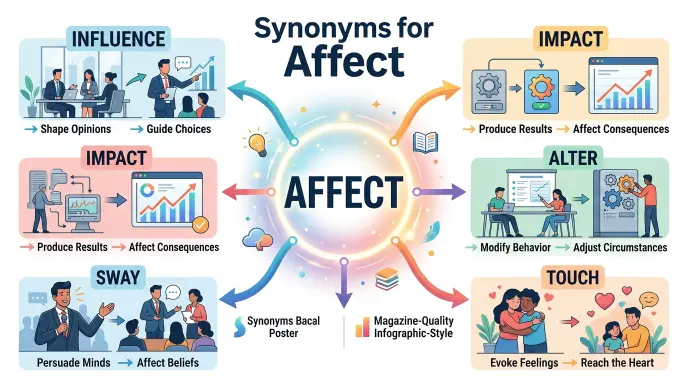
Quick List of Synonyms for Affect
| Word | Meaning |
| Influence | To change someone’s thoughts or actions |
| Impact | To have a strong effect on something |
| Change | To make something different |
| Alter | To modify something |
| Modify | To make small changes |
| Transform | To completely change something |
| Shape | To help form something |
| Sway | To persuade or influence |
| Touch | To emotionally affect someone |
| Move | To create feelings in someone |
| Disturb | To upset someone |
| Trouble | To cause worry or difficulty |
| Upset | To make someone unhappy |
| Inspire | To encourage someone |
| Encourage | To give confidence |
| Persuade | To make someone believe something |
| Influence | To guide thoughts or actions |
| Determine | To decide the result |
| Govern | To control something |
| Control | To direct or manage |
| Guide | To lead someone |
| Direct | To manage or influence |
| Manipulate | To control skillfully |
| Reach | To emotionally touch someone |
| Stir | To create strong feelings |
| Impress | To leave a strong feeling |
| Trigger | To cause something to happen |
| Produce | To create an effect |
| Generate | To make something happen |
| Prompt | To cause an action |
1. Influence
Meaning: To change someone’s ideas, behavior, or decisions.
Explanation: This is one of the closest alternatives to “affect.” It is often used when someone or something changes another person’s thoughts or actions.
Examples:
- Good teachers influence their students positively.
- Friends can influence the decisions we make.
2. Impact
Meaning: To have a strong effect on something.
Explanation: It is commonly used in business, education, and everyday conversations.
Examples:
- Climate change impacts millions of people.
- Lack of sleep can impact your health.
3. Change
Meaning: To make something different.
Explanation: This word refers to any kind of difference that happens over time.
Examples:
- The new policy changed our working hours.
- Exercise can change your mood.
4. Alter
Meaning: To modify something.
Explanation: It usually refers to making adjustments rather than completely replacing something.
Examples:
- The company altered its plans.
- Rain altered our travel schedule.
5. Modify
Meaning: To make small changes.
Explanation: Often used when improving or updating something.
Examples:
- The teacher modified the assignment.
- You may need to modify your habits.
6. Transform
Meaning: To completely change something.
Explanation: This word suggests a major change.
Examples:
- Technology transformed communication.
- Education can transform lives.
7. Shape
Meaning: To help form something.
Explanation: Often used for opinions, personalities, and future plans.
Examples:
- Parents shape their children’s values.
- Experiences shape our character.
8. Sway
Meaning: To influence someone’s opinion.
Explanation: It usually refers to persuasion.
Examples:
- His speech swayed many voters.
- Advertisements sway consumer choices.
9. Touch
Meaning: To emotionally affect someone.
Explanation: Used when feelings are involved.
Examples:
- Her story touched everyone.
- The movie deeply touched me.
10. Move
Meaning: To create emotions in someone.
Explanation: Usually refers to emotional reactions.
Examples:
- The speech moved the audience.
- His kindness moved her to tears.
11. Disturb
Meaning: To upset someone mentally or emotionally.
Explanation: Used for unpleasant effects.
Examples:
- The news disturbed him.
- Loud noises disturb my concentration.
12. Trouble
Meaning: To cause worry or difficulty.
Explanation: It often refers to emotional concern.
Examples:
- The report troubled investors.
- His comments troubled me.
13. Upset
Meaning: To make someone unhappy.
Explanation: Used for emotional effects.
Examples:
- The argument upset her.
- Negative feedback can upset employees.
14. Inspire
Meaning: To encourage positive action.
Explanation: Often used in motivational contexts.
Examples:
- Great leaders inspire people.
- Her success inspired me.
15. Encourage
Meaning: To give confidence.
Explanation: It creates positive effects on behavior.
Examples:
- Parents should encourage reading.
- Good feedback encourages improvement.
16. Persuade
Meaning: To make someone believe or do something.
Explanation: It refers to influencing decisions.
Examples:
- She persuaded him to apply.
- The advertisement persuaded many customers.
17. Determine
Meaning: To decide the outcome.
Explanation: It influences final results.
Examples:
- Hard work determines success.
- Weather determines crop production.
18. Govern
Meaning: To control or direct.
Explanation: Commonly used for rules and systems.
Examples:
- Laws govern society.
- Policies govern company operations.
19. Control
Meaning: To direct or manage something.
Explanation: Indicates strong influence.
Examples:
- Stress can control your behavior.
- Managers control business activities.
20. Guide
Meaning: To lead or influence.
Explanation: Often used positively.
Examples:
- Experience guides our choices.
- Mentors guide young professionals.
21. Direct
Meaning: To manage or influence.
Explanation: Used when someone leads actions.
Examples:
- The manager directed the team.
- Education directs career paths.
22. Manipulate
Meaning: To control skillfully.
Explanation: Sometimes has a negative meaning.
Examples:
- Advertisers manipulate emotions.
- He manipulated the situation.
23. Reach
Meaning: To emotionally touch someone.
Explanation: Often used for messages and stories.
Examples:
- Her words reached my heart.
- The campaign reached millions.
24. Stir
Meaning: To create strong feelings.
Explanation: Refers to emotional reactions.
Examples:
- The song stirred memories.
- The speech stirred hope.
25. Impress
Meaning: To leave a strong feeling.
Explanation: Usually creates positive effects.
Examples:
- Her presentation impressed the audience.
- Good manners impress employers.
26. Trigger
Meaning: To cause something to happen.
Explanation: Used for reactions and events.
Examples:
- Stress can trigger headaches.
- The announcement triggered celebrations.
27. Produce
Meaning: To create an effect or result.
Explanation: Often refers to outcomes.
Examples:
- Exercise produces energy.
- The policy produced good results.
28. Generate
Meaning: To make something happen.
Explanation: Commonly used for ideas and results.
Examples:
- The campaign generated interest.
- Reading generates knowledge.
29. Prompt
Meaning: To cause an action.
Explanation: Refers to encouraging an immediate response.
Examples:
- The email prompted a reply.
- His question prompted discussion.
30. Influence
Meaning: To affect thoughts or actions.
Explanation: It refers to causing changes in behavior, opinions, or decisions.
Examples:
- Social media influences young people.
- Parents influence their children’s habits.
Frequently Asked Questions
What does “affect” mean?
It means to cause a change in something or someone.
What is the closest synonym for affect?
“Influence” is one of the closest alternatives.
Is “impact” a synonym for affect?
Yes. It means to have a strong effect on something.
Can affect be positive?
Yes. It can describe both positive and negative changes.
Why should students learn these words?
They help improve vocabulary and writing quality.
Conclusion
Learning different words that mean affect can make your English more powerful and expressive. These alternatives help students write better essays, bloggers create engaging articles, and professionals communicate more clearly. Try using these words in your emails, assignments, and everyday conversations. The more you practice, the more natural and confident your writing will become.

I’m Ethan Cole, a passionate vocabulary writer at LexiBoost, where I help readers understand English words in a simpler and smarter way. I enjoy exploring synonyms, antonyms, and word meanings while creating easy-to-follow content that improves everyday communication